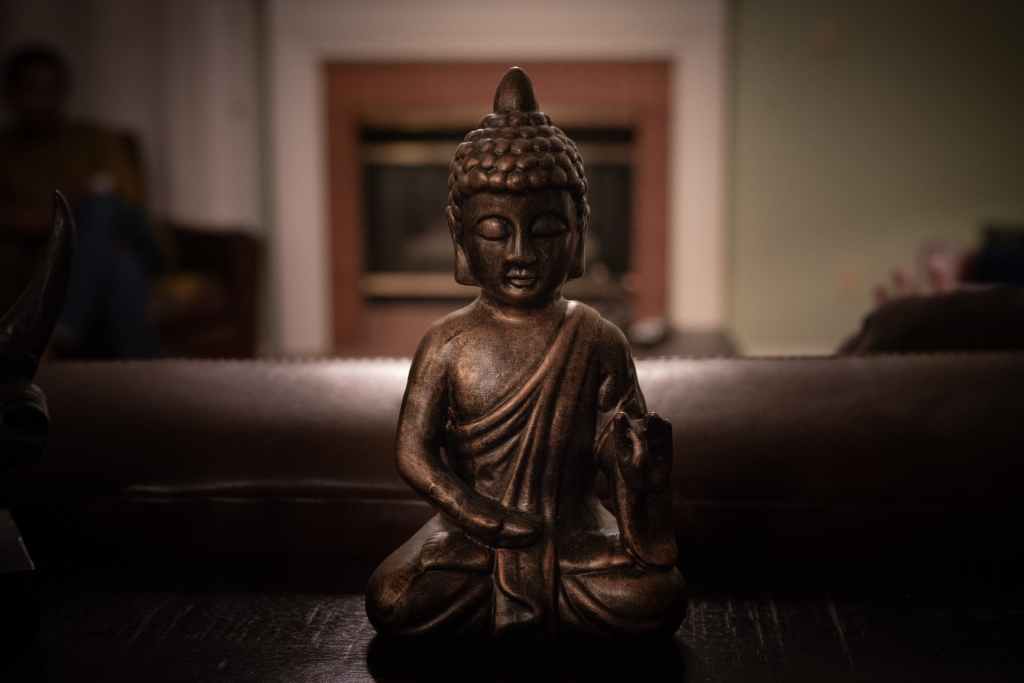
Growing up in Nepal, I was immersed in the world of superheroes, with gods from mythological series captivating our attention more than comic book heroes. Each god possessed special powers like long-distance flight, scaling, and invisibility, making them seem like everyday occurrences.
However, amidst these divine figures, one seemed ordinary. Of course, I would later realise Gautam Buddha was separate from others, as he was a human who attained enlightenment. But as a kid who would associate temples with gods, it felt normal to compare Buddha with others, and it always seemed something was missing in his arsenal.
As I grew older, my fascination with these superheroes (superhuman and gods) waned. I was discovering new stuff in life and was interested in stories outside of religious-mythological worlds (Science, History, Sports, Pop Culture, you name it). Interestingly, even when my belief and interpretations of the childhood mythological stories had evolved, my intrigue (and slight perplexity) with Buddha remained the same. Buddha, to me, always seemed like a philosopher with wise words and commandments, akin to a wise preacher symbolising peace. This portrayal was consistent in books and households, maybe except for those from Buddhist families.
It wasn’t until I delved into meditation that I discovered the depth and layers of Buddha’s teachings, realising he was more than a wise preacher – he was a doctor, engineer, and scientist rolled into one. I know what you’re thinking right now, so hang in for a minute.
Buddha’s diagnosis of suffering through the Four Noble Truths and Eightfold Path mirrors a doctor identifying and treating an ailment. He first identifies the presence of “dukha” (suffering), and then its root causes (craving and attachment), and then talks about the cessation of dukha and the eventual path of nirvana. But these steps still feel more like insights only, again coming back to that preacher portrayal we find common in stories. This is where he goes deeper and explains suffering and its cessation in terms of signals and sensations.
Whenever we receive signals from the outside world, we feel its sensation on our body and then react to it, either with craving (“rag”), or distaste (“dvesh”). These very reactions lead to the formation of knots and imprints (“sanskaras”), which then lead to eventual suffering. So, he identifies not reacting to the sensations as the pivotal step in breaking the chain of causation and the eventual cessation of suffering. To implement this, he delivers precise steps like an engineer would, in the form of meditation techniques like Vipassana.
The reason why he was able to learn this insight so was his scientific approach to understanding the mind. While modern science focuses on external experiments to pursue objective truth, Buddha turned inward, transforming his own mind and body into a laboratory. This introspective journey allowed him to uncover profound insights into the human mind and subjective human experiences.
Yet, what makes Buddha my favourite superhero isn’t his diverse academic prowess. (I mean, I once had a teacher who had done Engineering, MBA, LLB, and a PhD). It’s the skills he learned and the unique power he developed – mastery over his mind. This is one superpower that is not only relevant but also crucial to all beings. I know the word enlightenment gets thrown around too much these days (probably because it sells), and not everyone is interested in the enlightened crash course. But, who wouldn’t want to impose a little more control over his/her mind? Like the ability to live in the moment, practice a little mindfulness, and face suffering with detachment. Or even just tone down that constantly overthinking mind of ours.
If you think about it, these seemingly simple yet profoundly challenging skills far outweigh the flashy external abilities (like flying or protruding external limbs), which ironically have become not only possible but also easier in today’s world. Even in this light, Buddha stands separate from other superheroes, as he was not only able to exert this power himself but also equally invested in helping others learn it.
In an era where the democratisation of knowledge is much emphasised, Buddha, more than 2500 years ago, discovered and shared timeless insights with everyone. In that era, in that stratified society, fighting against the status quo, like a true revolutionary hero.
Ultimately, Buddha’s superhero status isn’t about vanquishing villains or saving the world from external threats. Instead, it’s about discovering and imparting timeless skills that will endure ages. And that’s my superhero!





 Nepali Wanderer
Leave a comment