Imagine a year filled with the same 365 days — what an ultimately boring fest that would be! But what if we could make some days special, where people could come together to celebrate, indulge in unique cuisine, and partake in some fun, meaningful rituals? Even better, what if each of these special days had its own captivating story, giving them a unique, timeless touch? Fortunately, we don’t have to imagine; we have festivals! And in Nepal, we are extra fortunate to have a rich tapestry of festivals. Yet, sadly, we are also witnessing a gradual decline in their vibrancy within our generation.
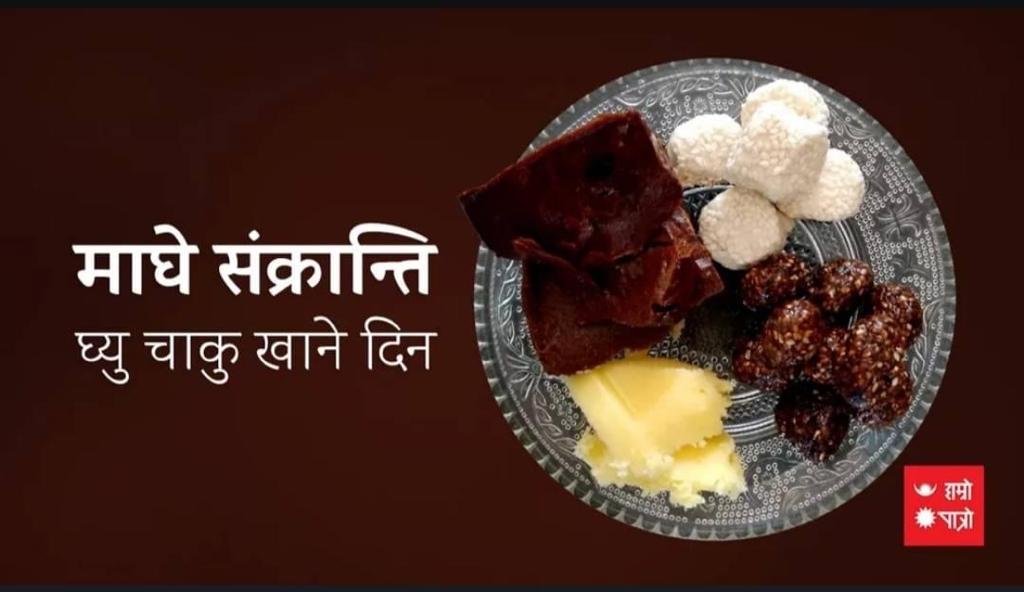
Today, we celebrated another special festival in Nepal — Maghe Sankranti (also know as Makar Sankranti). Like most households, I celebrated with my family, relishing tarul (Yam), teel (sesame), khichdi (rice and lentil dish), ghee, and chaku (a sweet made from sugarcane). However, amidst the joy, there lingered a twinge of nostalgia — a sentiment that seems to accompany me at every festival nowadays.
Just last night, I was reminiscing with a friend about how most of these festivals felt different when we were kids. Taking about my own experience, I get strongly nostalgic around Tihar, Holi, and Shivaratri, with each holding precious childhood memories. Tihar meant singing Deusi beyond midnight and earning money; Holi meant engaging in water balloon battles for at least a month (often around final school exams); and Shivaratri meant blocking paths, stealing bamboo, and lighting fires.
Sadly, every time I reminisce about these childhood festive memories, an unmistakable realisation always looms — the slow erosion of these festivals in today’s fast-paced (Western-influenced) world, which then prompts me to ponder: Do we dismiss it as a casualty of changing times, or is there a deeper loss that we are failing to acknowledge? And if yes: Are we losing something more profound than just a fun holiday?
If you analyse the festivals, it doesn’t take long to realise that festivals aren’t mere occasions for merriment; they carry historical, cultural, and ecological significance. Take today’s Maghe Sankranti, for example. In Nepal alone, the festival marks a significant occasion across diverse ethnicities. For the Kirat and Tharu communities in Nepal, two of the oldest ethnicities, the day signifies the beginning of the New Year, with the Kirat calendar running at an impressive 5000 something (signifying the momentous historic significance of the day). And if you consider the entire Indian Subcontinent, the same day marks a special event with variations like Lohri in Punjab (celebrated a day before) and Pongal in Tamil Nadu.
This clearly can’t be a mere coincidence, and it isn’t, highlighting its importance beyond history and culture. Many ancient religions evolved from nature, and so did the festivals. Maghesankranti, for instance, signifies the end of winter, thereby serving as a New Year across various cultures. Therefore, our festivals act as a bridge connecting us to nature, reminding us of cycles like seasonal changes, crop planting, harvesting, etc. (Also, the cuisines we eat are not random whims, as each cuisine gels with the particular season.)
Delving into the significance of Maghe Sankranti in the Kirat and Tharu communities reveals profound rituals. In the Kirat community, men abandon fieldwork to engage in tarul (Yam) hunting, while Tharu people use this day to plan communal resource sharing and discuss shifts in community roles. These seemingly simple traditions echo important traces of human journey — from the shift between hunter-gatherer and agricultural lifestyles to the varied communal structures of human tribes. That way, preserving these festivals becomes essential, not merely for the sake of age-old traditions but for the invaluable knowledge embedded in them. They not only offer glimpses into our collective past but also act as vehicles for carrying knowledge into the future generations.
I know everything eventually evolves with time, and it’s normal for these festivals to lose their colors with time. It’s just that I feel the current rate of change is not normal, that’s all. And at least at the personal level, I have finally felt this urge to break out of this sad nostalgia. So, here’s my festive resolution for this year: To learn more about all our festivals, beyond just celebrating them. (And probably dedicate some time in the future to research about them, in my never-ending list of things to do, lol.)
Life, at the end of the day, is all about exploration, learning, and memory-making. Festivals are the lessons passed down to fill our memory canvases, connecting us with our roots, culture, and nature. So, let’s learn more about our festivals, and have fun! That’s all for today, Happy Maghe Sankranti!






 Nepali Wanderer
Leave a comment