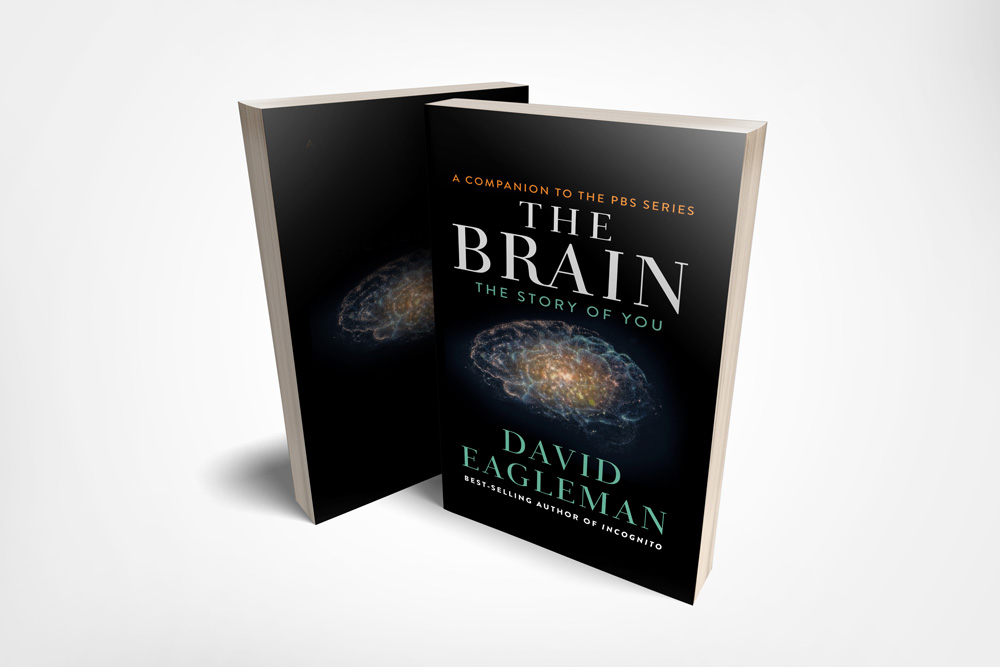
Who are you?
When you think about “you”, what comes to your mind? Is it your sense of self, thoughts, actions, or memories? Everything that defines you stems from one organ in your body: your brain. Thus, in a sense, you are your brain.
Our brain is comprised of billions of cells known as neurons. It is the connections between these neurons that give rise to our thoughts, emotions, and behaviors. One critical aspect of the brain is the ability of neurons to form and dissolve connections based on experience, known as plasticity. This feature distinguishes us from other animals (that are mostly hard wired), as it allows us to continuously learn and evolve from our experiences (thereby making us live wired). Thus, wherever we are and whatever we do continuously shape our brain.
What is reality?
Objects exist, and then we perceive them. So, where and how does this perception occur? Initially, our senses perceive the external world, and these signals are transmitted to our brain. Therefore, what we perceive as real, or reality, is our brain’s interpretation of these signals. In a way, it is not our eyes that see, but rather our brain’s visual cortex. To add to it, our experience of reality is also influenced by our past experiences. The same object (like a national flag) may evoke different emotions in different individuals, depending on their past experiences. Thus, we perceive the world not as it is, but as we are.
Who’s in control?
We are also heavily influenced by (usually practised) subconscious processes, often operating automatically. Many of our unconscious actions are hardwired processes of which we may not even be aware (like a male being attracted to an ovulating female). We become conscious only when conflicting decisions arise from the unconscious, hence the analogy of consciousness as the CEO of the brain. Then comes an interesting perspective on free will (or illusion of free will), as each of our decisions is influenced by our past actions. While on theory our future decisions “may be” predetermined based on past actions, it is almost impossible to predict them.
How do I decide?
When faced with a decision, various competing neural networks vie for control. Like there’s some impulsive part that urges immediate action and some deliberative part that considers long-term benefits. These conflicting tendencies are possible because of the brain’s ability to simulate multiple future scenarios, predicting potential rewards or punishments. Thus, our past experiences and current mental models shape our anticipation of future outcomes. As for the “I” that makes the decision, it is the dominant network that we identify with as “I.”
Do I need you?
So far, it may seem that one brain is sufficient for all functions. However, our brains require interaction with other brains to learn and function effectively. Through a process known as mirroring, our brains can learn the expressions of those around us, which is one reason we can experience the pain or empathy of others. Thus, the social fabric extends even to the neural level.
Who will we be?
In essence, our brains receive signals and execute their designated functions, which then raises the question: What if the brain receives signals beyond the constraints of the body and senses? For instance, what if a blind person could perceive visual information through alternative means? While this may seem like science fiction, certain sensory substitution experiments have already been realised. Considering the computational theory of the brain, which posits that it is not the physical matter of the brain but rather its computational result that matter, could we create a brain outside of biological constraints?
And finally, it’s time to delve into Consciousness.
Consciousness
Is consciousness merely a byproduct of the brain, or is the mind-body duality a legitimate division? Insights from neuroscience and medical cases (like physical brain injuries affecting consciousness or the transformative effects of psychedelics) suggest the former. Thus, consciousness may indeed emerge from the computational processes of neurons, like an emergent phenomenon that transcends the sum of its parts. This raises intriguing questions and possibilities, like whether non-living entities with the right computational calculations could potentially develop consciousness, paving way for concepts like uploading consciousness to alternate entities.
Last question: If an artificial entity possessed all your thoughts, memories, knowledge, and consciousness, would it truly be you?
My takeaway:
Since this was my first book about the brain, delving into the intricate workings of the brain was a bit challenging. However, it was also super captivating, prompting me to immediately delve into another book on the subject, which I will discuss next!





 Nepali Wanderer
Leave a comment