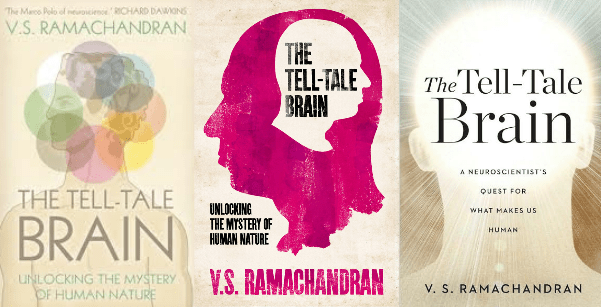
Introduction:
When Charles Darwin introduced the bombshell of evolution, it sparked a heated debate: Are humans angels or mere apes? While we no longer engage in the angel debate (we are not!), we also need to acknowledge that we are not “merely” apes. Don’t get me wrong; we are undoubtedly apes, as much as we are mammals and vertebrates. However, it would be unjust to reduce us to mere apes, given our vast capabilities. We possess the ability to split atoms, decipher genes, and aspire to explore the cosmos.
More importantly, we possess the capacity for introspection, pondering our origins and our significance in the cosmic narrative, delving inward to explore the cosmos within ourselves. And all this is made possible by a three-pound jelly-like structure within our bodies that could easily fit in our palms: our brain.
Structure:
It’s easy to understand the brain by understanding its fundamental units, known as neurons. A typical brain contains approximately 100 billion neurons, communicating with each other through synaptic connections. Each neuron connects with around 1,000 others, forming networks known as neural networks. Each connection corresponds to a specific mental state, and the permutations of these connections result in a staggering number of potential states, surpassing the number of entities in the universe.
The brain’s various structures consist of these networks, with their connections forming circuits. Every action, thought, and emotion we experience is a result of information flow within these circuits. And while we could spend all day marveling at the brain’s structure (or the mind-boggling numbers involved), it’s important to press further on why our brain is extra special? What makes us collaborate in groups and also seek inward? The answer “could” lie in the special class of neurons known as Mirror Neurons.
Mirror Neurons:
Certain neurons in the brain not only fire when we perform actions but also when we observe others performing those actions. Essentially, these neurons mirror the actions of others, hence their name, mirror neurons. For example, when you see a needle being poked in some other person, the same neurons fire in yours as if you were being poked. Of course, your skin sends conflicting signals (that it’s not you), which is why you don’t experience the same pain. But you still empathize.
But the significance of mirror neurons extends far beyond empathy. The simple act of imitation facilitates collaboration, social learning, and the transmission of culture, or what can be termed the “cultural genome”. Within a few generations, humans can adapt to environmental changes through cultural insights, a process that would take millennia via genetic evolution alone. Thus, mirror neurons may hold the key to our liberation from the constraints of Darwinian genetic evolution, propelling us into the realm of rapid cultural evolution. Are mirror neurons unique to humans? No, but we are “blessed” with a greater abundance of them than other species. Lastly, just to decode the blessed part, it could all be the working of evolution, as humans with more of these special neurons were able to survive more and propagate their genes.
Phantom Limbs:
Okay, time to talk about something outrageous (if you’re aloof from this concept): phantom limbs. Have you ever heard of individuals who still feel sensations in limbs that have been amputated? For a long time, this phenomenon was dismissed as mere psychological imagination. However, a touch on the face can evoke sensations in the missing limb. Why does this happen? It’s because our brains possess a map of our body organs, and all sensations are processed within the brain. Our sense organs act as sensors, receiving signals as input, which are then processed in the brain.
Think of these four steps. Looking vs Seeing vs Knowing vs Feeling. First, you look at the photo from your high school, and then you see a particular person in the group. The memory then knows it’s your first crush from the fourth standard. And finally, you feel the twinge of nostalgia. Our brains are intricately involved in various levels of experience, and even seemingly straightforward processes like vision occur not in the eyes but in the brain. Regarding phantom limbs, why does an individual feel sensations from the missing limb on their face? It’s because the face and limbs are mapped together in our brains. (There’s more detail to it — but you get the memo!)
Synesthesia:
Let’s delve into an even more perplexing phenomenon! Smelling touch, hearing colors or seeing numbers as colors, etc etc. Again, I know what you’re thinking if you haven’t heard about this phenomenon before (or blessed with it yourself!) As mentioned earlier, our sense organs function as sensors, receiving signals as input, which are then processed in the brain. Due to cross-wiring or some form of internal mix-up, these signals are cross-processed, resulting in a phenomenon known as synesthesia. There is a high prevalence of synesthesia among creative artists like writers, painters, musicians, etc. (Now you know how some folks can create colorful musical masterpieces!)
Consciousness:
Lastly, how can we talk about the brain without talking about the most special trait of life? Consciousness. Interestingly, the most extraordinary aspect of life is also one of the least understood. How consciousness operates remains a profound mystery, captivating the curiosity of scientists and philosophers, right from the days of ancient scriptures (think Upanishads!) The mirror neurons discussed earlier “could” play a pivotal role in consciousness. These neurons enable us to simulate the thoughts and feelings of others around us. Perhaps self-awareness arises from being aware of oneself through the awareness of others being aware of us. In other words, consciousness could be the culmination of the full circle of mirror neurons.
One of the reasons we perceive the self is due to two essential properties of consciousness: unity and continuity. We perceive ourselves as a unified and continuous entity. However, research suggests conflicting parallel modules in the brain vie for the role of the self. That way, there could be multiple versions of the Self, and when you feel layer upon layer, there could be no such thing as the Self, like the center of gravity. One individual, approximately 2500 years ago, came up with this insight. You know who! (My favorite superhero of all time!)
Conclusion:
Just the fact that we know very little about the brain makes the journey of Neuroscience even more fascinating. To give you the picture, Neuroscience today is at the level Chemistry was in the 19th century, with many new elements and their groupings still discovered. That way, the true age of discovery has just begun!






 Nepali Wanderer
Leave a comment