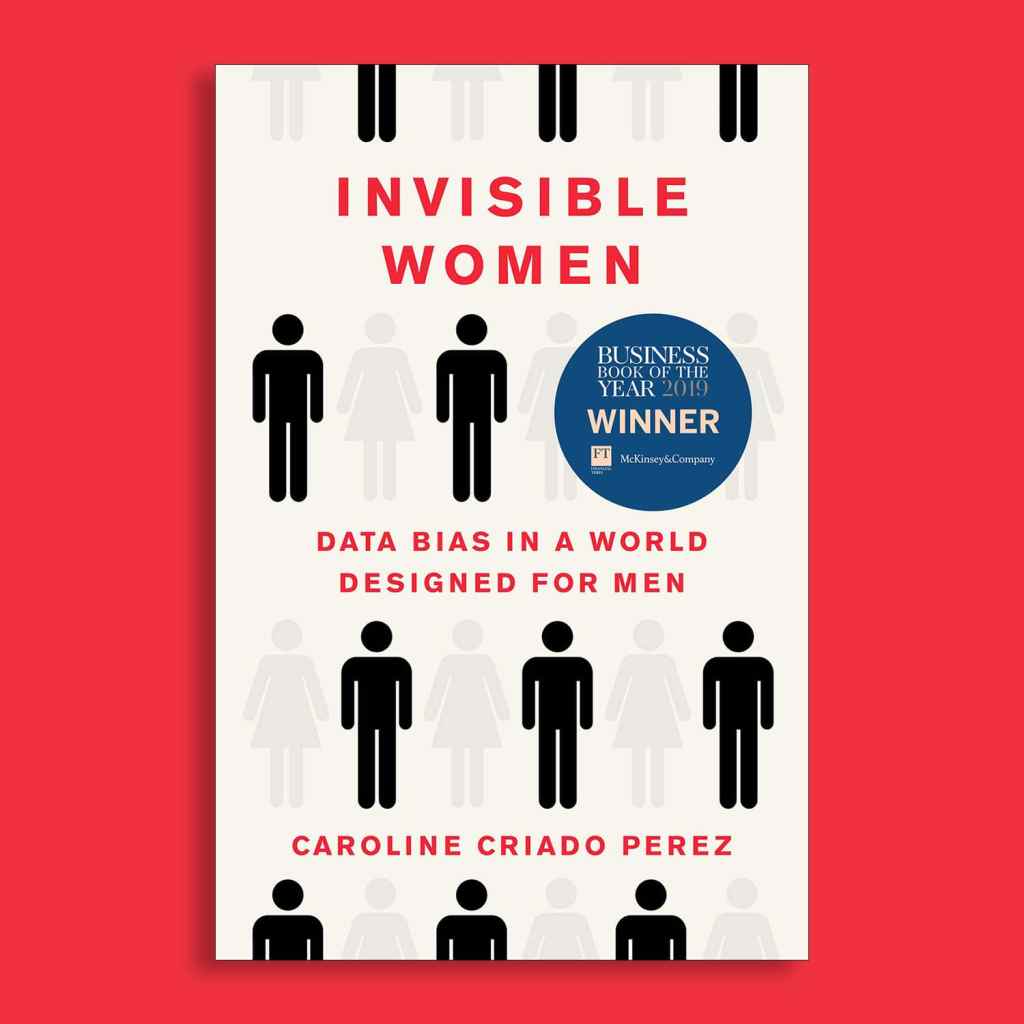
We live in a data-driven world. From trivial YouTube advertisements to important life-changing policies, decisions are based on data. However, we also live in a world of gender inequalities where males are often seen as the default human. This inequality also results in a gender data gap, which will only exacerbate the disadvantages women face unless we act to address this issue. “Invisible Women” is a book by Caroline Criado Perez that delves into this very issue, exploring the consequences of failing to account for half of humanity.
Introduction: The Default Male
If we look around, we see a world with a default male universality. Terms like “mankind” and “man” reflect a view of men as the default human beings, making women seem like an aberration or deviation from the norm. While this trend can be traced back to ancient history, much of our understanding of history has been written in recent times, often overlooking the significant contributions of women. The narrative of “man the hunter” begs the question: what were women doing during these ancient times? Only later did historians acknowledge “woman the gatherer,” thus shaping our understanding of our hunter-gatherer history. This underscores two things: First, the inequality between men and women. Second, the gap in data, right from history (like history being full of men) that makes women invisible. In today’s data-driven world, this gap is more detrimental than ever as it compounds and perpetuates the problems women face.
Daily Life
Let’s start with the problems women face in daily life. Even simple acts like commuting are not designed with women in mind. Most public transport systems fail to consider pedestrians, many of whom are women in less developed parts of the world. These systems analyse data to determine which routes or modes of transport are most important, but the data is often centered around male activities, omitting the commutes women undertake for tasks like fetching water, gathering resources, or shopping. The same applies to other urban planning spaces like open parks and public toilets. Most of these places are made gender-neutral, which de facto makes them male-only. Many women feel uncomfortable using gender-neutral toilets, and open parks and play areas often turn into male-only spaces.
One solution is Gender-Wise Data Segregation. For example, knowing which sports teenage girls play can help design separate sports spaces, whereas aggregated data tends to cater to boys’ sports. Examples from Sweden and Austria show that data segregation and the creation of separate male-female spaces in parks and sports areas have increased female participation. This simple tweak can have a massive overall effect, leading to better physical and mental health for half the population.
The Workplace
Much of the work women do is invisible, starting with domestic chores like cooking and childcare. This already drains creativity and increases stress, making it difficult for working women to devote full, creative hours to their jobs. Additional commitments like having children further impede the smooth career growth that men often enjoy. Home and childcare responsibilities push many women towards part-time roles, limiting their stability, growth, and access to full-time benefits. Consequently, even equally capable women find it much tougher to reach top positions at work.
The workplace environment, from hiring to promotion, is often male-dominated. Many workplaces claim to value merit, but many job requirements (like long, irregular hours in startups) are tailored to men. STEM (Science, Technology, Engineering, and Mathematics) fields are often seen as merit-based but are predominantly male. This is partly due to societal perceptions; when asked to imagine a scientist or genius, most people picture a man. This bias is rooted in education, where male scientists are predominantly featured, and deserving female scientists neglected. These internal blockages make it mentally more challenging for women to pursue STEM fields, which are already male-dominated.
Women face problems beyond work that men might not even imagine. Sheryl Sandberg, author of “Lean In,” realised the importance of nearby parking for pregnant women in Google, but only when she was pregnant herself. Google co-founder Sergey Brin easily agreed to create a separate parking space when informed. This example highlights that many difficulties arise from ignorance rather than intention. Men in top decision-making roles often fail to see problems from female perspectives, leading to designs that make women invisible.
Design
Consider the piano, a seemingly gender-neutral instrument. Except, the keyboards are catered to male fingers. Similarly, car manufacturing designs around a standard male body. This one-size-fits-men approach has serious consequences in fields like the military, where uniforms and safety equipment were long designed for male bodies. Women often have to fit around things rather than having things designed for them, due to a gap in data during the design phase. This seemingly minor difference has life-changing consequences, whether in accidents or wars. Collecting data on female needs and incorporating it into design can prevent such issues.
One example of poor design consideration is clean stoves for women. In many parts of the world, women cook using stone stoves, exposing them to toxic fumes equivalent to 100 cigarettes a day. The designers, who mostly happen to be men, created a cleaner stove as a solution, hoping it would save women’s lives. Except, most women after a point reverted back to their traditional smoke-ridden stoves. This seemed irrational until it was understood that cleaner stoves required chopping wood into small pieces, a difficult and time-consuming task. A local NGO in India solved this by creating a metal device that fit traditional stoves while adding clean stove airflow. This was possible only through consultation with grassroots women. This shows that using data from the design phase and adapting technology to women’s needs is crucial.
Going to the Doctor
Women face adversities even in healthcare. One might think that visiting a hospital or using medicines wouldn’t involve discrimination, but women face problems even here. Most drugs and medicines are developed based on medical trials, traditionally conducted on male bodies, assuming they would work for females too. The differences between male and female bodies run deeper than physical appearance, extending to hormonal and cellular levels. Even though we know about these differences today, some trials still prefer male-only data due to the lack of past female data for comparison. While guidelines now mandate including both sexes in medical trials, many private companies still opt for male-only data to save costs and simplify comparisons. This contributes to higher rates of misdiagnosis among women compared to men.
Research on female-specific health issues, such as period pains, is often underfunded and overlooked. These issues don’t receive high priority, from securing research funds to conducting studies. The dominance of men in decision-making roles and their ignorance of these problems perpetuate this neglect. Since male and female bodies are different, the problems they face are also different. Therefore, bridging the gender data gap in health research and trials is urgent.
Public Life
Consider the Gross Domestic Product (GDP), often seen as the ultimate economic metric. Many people don’t realise that GDP is an abstract calculation based on assumptions. Ordering food from a restaurant adds to GDP, whereas cooking at home does not. This nature of GDP perpetuates the invisibility of women’s work. Many essential but informal tasks, mostly done by women, are not accounted for in GDP. When countries face crises or need to cut expenses, they often slash welfare programs like childcare, elder care, and health. This doesn’t eliminate the need for these tasks; it simply shifts them to women as unpaid, invisible work. This unpaid work culture creates the perception of non-working women, making them economically vulnerable and affecting their self-esteem and confidence, hindering their ability to voice opinions and make decisions.
Another data gap is related to non-segregation that we discussed above, like calculating household income and expenses only. Whereas in reality, the income and expenses males and females make are different. Especially in poor economies, it is seen that female expenditure is mostly around household expenses (and especially for children) compared to male expenses.
Lastly, this inequality in public space and data gap is only aided by inequality in governance. The bare minimal (mis)representation of women in government and public spheres makes it difficult for women-related policies to be created and implemented. In most corners of the world, democracy still seems like equal participation but only of one half.
When it goes wrong
Then come situations when things go wrong, like during natural disasters, wars, and other humanitarian crises. During these extreme crises, women’s problems compound more than ever. Shared housing during crises or lack of basic amenities like toilets increases sexual violence and harassment against women. Food crises often force women to sacrifice their calorie intake, ensuring others can eat first. Wars bring even more severe problems, with mass rapes and exploitation common during crises. The irony is that crises often make women’s needs seem less of a priority. The truth is, it’s not just disasters but gender inequality that endangers women during crises.
Then when it comes to rebuilding after the crises, women are often excluded from the rebuilding projects. This seems especially contradictory if you consider that women have always been central to building housing and communities, right from prehistoric hunter-gatherer days. Thus, failing to incorporate women has led to many rebuilding failures. For example, during the earthquake crisis in Gujarat (2001), the builders created houses without kitchens. If you think this was a one-off example, a similar problem happened during the Tsunami crisis. Sometimes the relief distributors deliver food but forget to carry along fuel to cook, all obvious observations which sadly aren’t obvious to males, owing to females taking care of these activities.
In almost all activities in life, it is important to bring in as many perspectives as possible, to make these obvious and common-sense stuff common, thereby underscoring the importance of diversity and inclusion. One simple solution to adding diversity is to just include half of the population in these activities.
Afterword
Most adversities women face fall under three themes: making women invisible during the design phase, exploiting their bodies through violence, and making them work more than they are paid for or credited for. Data gaps further amplify these problems, perpetuating gender biases and inequalities under the guise of data-driven decisions. Lastly, excluding half the population in data collection leads to harmful gaps for humanity overall. Women’s problems are human problems, and we cannot imagine a prosperous world without addressing the issues faced by half the population.
My takeaway
It’s easy to pick out extreme feminist measures and dismiss every feminist issue as “feminazi” stuff. But the truth of gender inequality and the challenges women face worldwide is undeniable. Therefore, it’s crucial to look at the bigger picture and address serious, detrimental problems. Reading this book brought many new realisations. From the non-obvious details like safety equipment designed for male bodies to the shocking fact that women are prescribed drugs based on male trials, I became aware of my ignorance of many injustices.
As a Data Scientist, this book has profoundly influenced the way I use data science. By introducing simple tweaks, like collecting separate data for males and females and analysing it with gender segregation, we can uncover hidden insights that can change billions of lives. It’s important to use data for policy and decision-making. But before we do that, it’s even more critical to address the gender data gap.





 Nepali Wanderer
Leave a comment