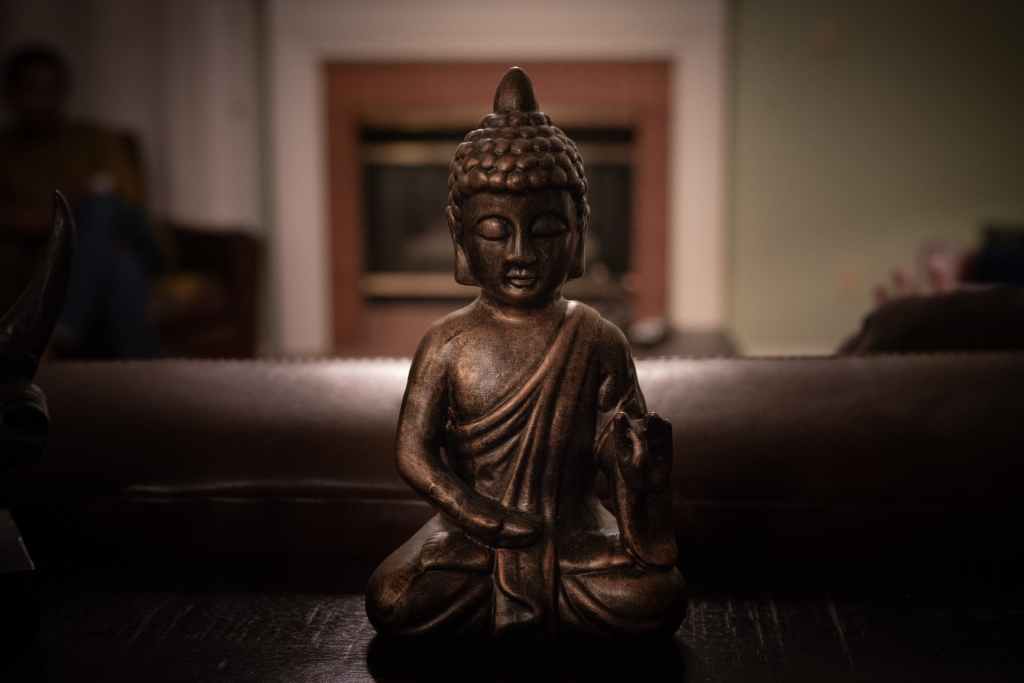
Buddhism, followed as a religion in many parts of the world, is also a lifestyle philosophy. As citizens of the modern world, we often ask: How scientific is this knowledge? This question becomes especially relevant with ancient knowledge and spiritual rituals. Should we view them as mythological beliefs, knowledge that was once useful, or as something timeless and scientifically backed?
I picked up the book Why Buddhism is True because of this curiosity. I wanted to know what modern science says about the wisdom Buddha shared over 2500 years ago. I’ve also taken a Coursera course on the same topic by the author. Here is my summary of the book and the course, where I will explore Buddha’s core concepts with explanations from modern science.
Dukha:
Dukha, or suffering, is the first of the Four Noble Truths taught by Buddha. According to him, our lifestyle and the world around us inevitably create suffering. By Dukha, Buddha didn’t just mean suffering from pain but also the suffering caused by the impermanence of things. Everything — whether a living being, object, idea, or feeling — is impermanent, and our attachment to these impermanent things creates suffering. Buddha emphasised the fleeting nature of pleasure and pain.
When analysed through the lens of science, a world of fleeting pleasure and pain makes sense. Evolution doesn’t care about our happiness; it only cares about two things: survival and propagation. So, it has wired us to behave in ways that maximise these goals, which often involves pursuing the sensual world.
Buddha (along with the Upanishads and the Gita) emphasises controlling the senses and rising above sensual pleasure. But our senses are there for a reason: to guide us. They help us identify the right food (like vibrant colors and pleasant fragrances) and the right mating partner. For a long time, we lived (and evolved) in a very different environment. In those environments, emotions like anger, rage, and lust made sense for survival and reproduction. Similarly, being risk-averse (mistaking a rope for a snake) and prioritising speed over accuracy in dangerous situations (viewing a person from a different tribe as an attacker) were beneficial.
However, today we live in a completely different environment. Therefore, our default nature often leads to suffering.
Arisal of Dukha:
Arisal of Dukha is the second of the Four Noble Truths taught by Buddha. He identifies Tanha (thirst) as the root of suffering. Our constant thirst, desires, and cravings explain our dissatisfaction and unhappiness. Since our desires are never-ending, they are often unfulfilled, leading to suffering. Even when our desires are fulfilled, the pleasure is often fleeting and less than anticipated, which also causes suffering. Thus, our thirst and desire inevitably lead to suffering.
Modern science explains this behavior using chemicals like dopamine. Although known as the pleasure molecule, dopamine is more about the anticipation of pleasure, driving us to plan and pursue things. This results in us constantly running on a hedonic treadmill, always chasing something.
From an evolutionary perspective, this makes sense. For survival and reproduction in a competitive environment, it was advantageous not to be content with what one had. So, the evolutionary algorithm makes us pursue ever-increasing goals. As our environment changed, so did our goals: from courting mates in forests to attracting them in clubs, from seeking recognition in a tribe to seeking prestige in modern society. These pursuits ultimately aim to increase our chances of survival and reproduction. Above all, even when we have everything, we still believe that one new furniture will finally complete us (guess the movie).
Cessation of Dukha:
Cessation of Dukha is the third Noble Truth of Buddha. Just as suffering has its root in desires, its cessation is linked to detaching from these desires. But how do we detach from desires? The answer lies in understanding our feelings, and science offers an explanation as well.
It’s strange how we know what to do and what not to do, yet we often make the same mistakes. Although we like to think of ourselves as rational beings, we are, at our core, driven by emotions. Our feelings, not rational thoughts, drive us.
Feelings, like senses, have an important purpose. They guide us. Whether it’s the eerie feeling of fear or a positive vibe, feelings help us navigate various situations in life. Consequently, we act heavily influenced by how we feel, which is influenced by what we sense. Many neuroscience experiments have shown this, such as people being relaxed and lenient in their actions when seated in a comfortable couch, and harsh and strict when seated in a hard chair.
However, like other evolutionary traits, most of these feelings evolved in our prehistoric hunter-gatherer days and are not always helpful guides in the modern world. Lust, anger, and jealousy often harm our well-being. Therefore, dealing with these feelings is crucial, and the best way to do so, as Buddha recommends, is to observe them.
Path to Cessation of Dukha:
Buddha recommends the Middle Path, avoiding extremes, as the way to cease Dukha. Within this Middle Path, he outlines the Eightfold Path as a guide to ending suffering. The Eightfold Path involves living a lifestyle conducive to meditation. One path in particular, Right Mindfulness, is directly linked to the observation of feelings we discussed earlier.
Buddha differentiated between two types of meditation. The first is concentration meditation (Samadhi), which focuses on one-pointedness of mind. While this state brings benefits such as peace and well-being, Buddha saw it as merely a step toward the second type of meditation, Insight Meditation (Vipassana). This meditation helps us to be mindful of the present moment and observe things as they are, whether they are feelings, thoughts, or other mental states. Practicing mindful meditation enables us to be aware of feelings, their arising and cessation, and their fleeting nature. Thus, we can be more in control of our actions, rather than being heavily influenced by feelings that might not be conducive to happiness in our current environment.
But wait, when we say “we can be in more control,” who are we talking about? The inner Self in us? For Buddha, there is no Self; it is an illusion.
Anatta (No Self):
When Buddha introduced the concept of No Self (Anatta or Anatma), he knew it would be considered radical. The society of his time was deeply attached to the concept of Atma (Inner Self), so he knew he was going against the current and called it Pratigami.
Buddha viewed a person as a composition of five aggregates: Physical form, Sensation, Perception, Mental formation (Volition/Will, Desire, Aversion, where Karma is formed), and Consciousness (Awareness). Beyond these, he realised there is no separate Self. This raises the question: Who is the experiencer? Buddha realised there is no experiencer. Rather, it is the thoughts that think, and the feelings that feel.
Modern science has a similar take. Neuroscience also considers the idea of Self an illusion. The modular theory of mind sees our mind as a composition of competing computing modules. Behind every action, several modules compete against each other. The constant stream of thoughts we have results from these modules. Our senses and corresponding feelings heavily influence which module emerges victorious and decides the action, which we then associate as our Self. Thus, according to neuroscience, the concept of Free Will is also an illusion. Various experiments have shown that we make decisions and rationalise them afterward, without realising it. Again, the language we use (like saying “we make decisions”) gives the impression of a Self, with free will. But what we call “we” is just one of many competing modules.
Buddha believed that this association or clinging to Self, born out of a deep desire for self-preservation and immortality, is the root of ego and many evils in the world. Following the Eightfold Path and practicing mindfulness can help dissolve our ego (or completely dissolve it if we attain Nirvana) and see the world as it is. It will enable us to live in the moment and lead a happier, less suffering-ridden life.
My Takeaway:
I always see time as an important litmus test in gauging the value of knowledge. Just as evolution eliminates traits less favorable for the environment, time winnows knowledge. In that regard, Buddha’s teachings are both timeless and time-tested.
When we think about knowledge, it’s understandable to analyse it scientifically. But it’s equally important to analyse knowledge holistically, as knowledge can be generated using different approaches. This is how I view spiritual knowledge. The same is true for cultural knowledge passed down over the years, which likely works well for a particular society (geography, lifestyle, etc.). Of course, this doesn’t mean accepting everything passed down without critical analysis, as many societal evils have also been transmitted over time.
We should also distinguish between objective and subjective knowledge. Unlike scientific knowledge, which is objective, spiritual knowledge is subjective, so we should be careful not to impose it on others. Instead, people should be encouraged to explore and experiment with this knowledge on their own. Nevertheless, comparing insights from objective, science-based approaches can help us understand ancient spiritual wisdom better and motivate us to follow the timeless, time-tested path with more conviction.
Lastly, it is important to analyse the truth on our own. Interestingly, Buddha recommended an engineering mindset in analysing the truth, focused on utility. What works well for you is your individual truth. And to know this, awareness above everything is essential.






 Nepali Wanderer
Leave a comment