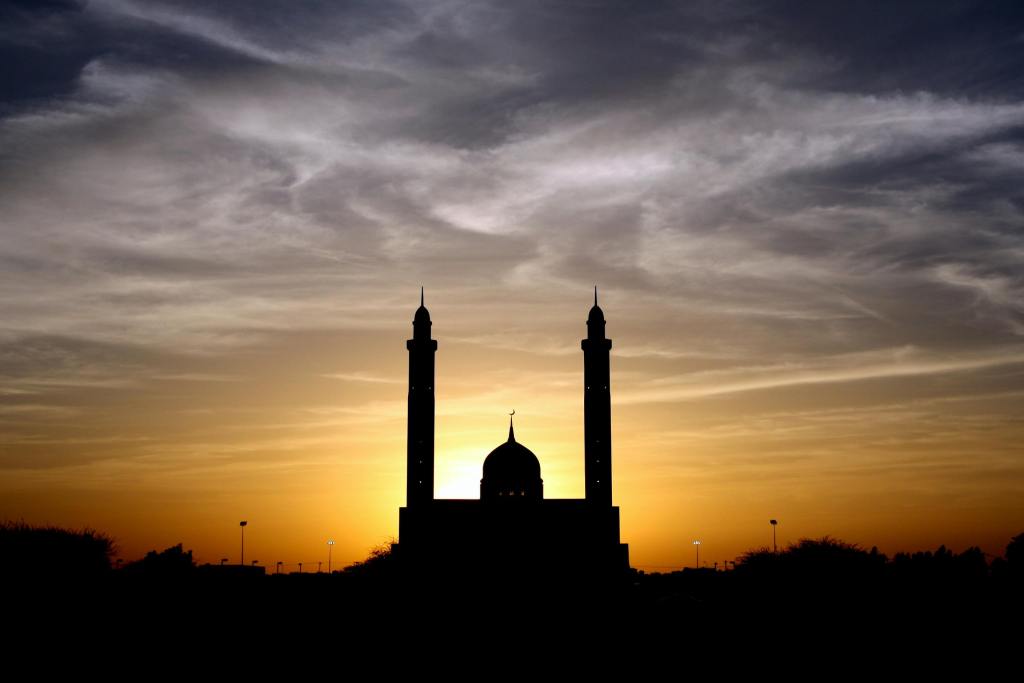
In our exploration of the origins of the Abrahamic religions, we discussed the genesis of the Arabs and their holy pilgrimage site, Mecca. In this story, we will continue our journey of history in the Arabian Peninsula.
After the time of Abraham, the Arabian Peninsula remained fragmented into numerous tribal groups. Although the Arabs regarded the Kaaba — the temple built by their ancestor Abraham and his son Ishmael — as their sacred site, they continued to practice polytheism. Each tribe worshipped its own gods, many of which were animistic deities such as the Sun God, Moon God, and Earth God. Mecca, bustling with idol markets, was a center for these various forms of idolatry, with the Kaaba itself housing over 300 idols.
Amidst this culture of polytheism emerged a figure who would transform the Arabian Peninsula and leave an indelible mark on world history.
Muhammad was born into the powerful Quraysh tribe of Mecca. However, his early life was marked by hardship; he lost his father before his birth and his mother at the age of six. Raised first by his grandfather and then by his uncle, Muhammad grew up amidst the nomadic tribes that traded goods across the desert. Under his uncle’s tutelage, Muhammad mastered the art of trade. His diligence and integrity earned him the favor of Khadijah, a wealthy merchant widow for whom he worked. In 595 AD, at the age of 25, Muhammad married Khadijah, who was 40.
Despite his success as a merchant and his prominent position within Meccan society, Muhammad was not content with material wealth alone. His spiritual inclinations led him to meditate in a cave on Mount Jabal al-Nour near Mecca. During one such retreat, he received his first revelation from the Angel Jibril (Gabriel). Initially troubled and uncertain, Muhammad gradually embraced these divine messages and began to share them with others. His wife Khadijah and close friend Abu Bakr were among the first to believe him, and a small group of followers soon gathered around him. These revelations would eventually be compiled into the Quran, the central religious text of Islam, which Muslims believe to be the word of God as conveyed by Jibril.
However, Muhammad’s message of monotheism posed a direct challenge to the polytheistic practices that underpinned Mecca’s economy and social structure. The city thrived on the commerce generated by idol worship, and many tribal leaders saw Muhammad’s teachings as a threat. As a result, Muhammad and his followers faced persecution. This hostility led to the Hijra (migration) in 622 AD, when Muhammad and his followers relocated to Yathrib, a city that would later be known as Medina. Here, they established a growing Muslim community and gained increasing support.
Following a series of conflicts with the Meccan tribes, Muhammad and his followers ultimately triumphed and entered Mecca in 630 AD. Upon their victory, Muhammad destroyed the idols in and around the Kaaba, establishing Islam as the dominant faith in the city.
Muhammad passed away in 632 AD, but the religion he founded rapidly expanded. The early Islamic community evolved into the Caliphates — a form of governance combining political and religious leadership under a Caliph. However, a significant issue arose immediately after Muhammad’s death: the question of his succession. Some believed the Caliph should be chosen by consensus, while others argued that leadership should remain within Muhammad’s family.
This initial disagreement seemed resolved when Abu Bakr became the first Caliph and Ali, Muhammad’s cousin and son-in-law, became the fourth. However, the division persisted and eventually led to the major schism between Sunni and Shia Islam. Sunnis supported the leadership of Abu Bakr, while Shias believed Ali was the rightful successor. This division remains a profound aspect of Islamic history and continues to influence the Muslim world today.
Despite internal conflicts, the Islamic empires flourished under successive Caliphates, spreading across three continents — Africa, Europe, and Asia — from India in the east to Spain in the west.
Next, we will delve into the Golden Age of Islamic Empires and examine their significant contributions to world history.






 Nepali Wanderer
Leave a comment