As a kid, I thought America (meaning both North and South America throughout this story) was an empty land before Columbus. Every time I read “Columbus discovered America,” an image of a vacant land would come to mind. Later, when I read about the ‘Native Indians,’ I assumed America had a few sparse inhabitants, as accounts of natives were almost scant and overshadowed by the glory of Columbus and other conquistadors.
It was only later, when I read about two other discoveries—the “discovery of India by Vasco De Gama” and the “discovery of China by Marco Polo”—that I realized there was something wrong with my understanding of the word ‘discovery.’ I knew people existed in India and China long before Vasco De Gama and Marco Polo. This realization intrigued me to learn more about the ‘new world.’
As it turns out, the new world was not even new when Columbus first set foot on it. People had migrated to America as far back as 16,000 BC, with some archaeologists suggesting even earlier dates. It is believed that the people from the Eastern Siberian region migrated to Alaska via the Bering Strait land bridge. When the land bridge ceased to exist after the last Ice Age, America became disconnected from Eurasia.
Archaeological evidence of human settlement in Chile around 14,000 BC indicates that human habitation had spread from North to South. The people in America were not at all “lost.” Parallel to the rest of the world, America had its own advanced and sophisticated civilizations and societies that achieved significant milestones such as the domestication of agriculture and the invention of writing independently.
For those unfamiliar with the geography of America, it helps to divide it into four regions for clarity: North America (modern-day Canada and the USA), Central America (modern-day Mexico, Guatemala, etc.), South America, and the Caribbean Islands.
The longest surviving civilization in America was the Maya Civilization in Central America. Significant settlements also existed around the Mississippi region in North America and the Andes region in South America. By the time Europe began its era of exploration, America had two major empires: the Aztec Empire in modern-day Mexico and the Inca Empire in modern-day Peru.
The Aztec and Inca Empires were not small. Each had massive populations (around 10 million), arguably larger than some prominent European empires of the time. The Aztec capital Tenochtitlan (modern-day Mexico City), for instance, was a city built on an island on Lake Texcoco, ruling over 400 to 500 small states with a total population of around 5 million.
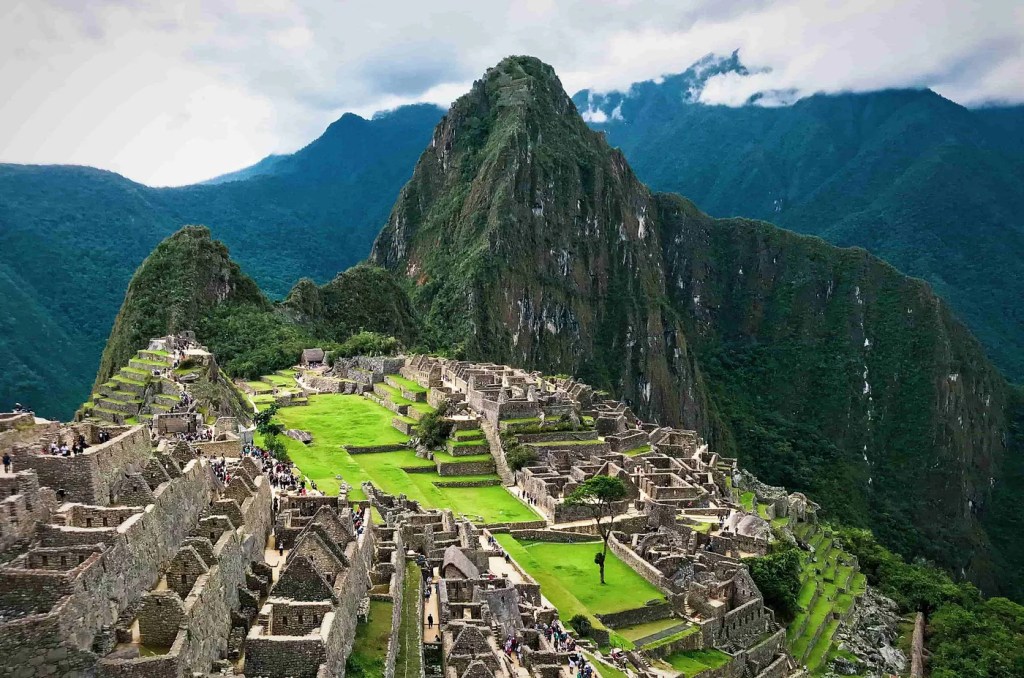
The population of America before Columbus is estimated to have been around 60 million, out of a global population of approximately 500 million. Thus, the newfound land was far from sparsely populated. The ingenuity and industry of Pre-Columbian America are evident in sites like Machu Picchu in Peru and Chichen Itza in Mexico, both of which are considered among the world’s seven wonders.
However, one event—the Columbian discovery and the subsequent Columbian Exchange—would mark the eventual end of the Native American world. In less than 100 years, the population of Native Americans would plummet from around 60 million to 5 million. Bear in mind, all these population figures come with a wider range of estimates, highlighting the uncertainty in the available data. Therefore, the point is to get a general picture, rather than argue about point estimates.
The Columbus exploration and exchange is a historical event that requires deep introspection. It demonstrates that the same event can have vastly different narratives depending on which side is telling the story. From the explorers’ perspective, the discovery of America was a triumph, not just in terms of wealth and potential riches but also as a tale of exploration and adventure into the unknown—a narrative that parallels modern space exploration. Conversely, from the natives’ perspective, it was the greatest catastrophic event in history, as around 90 percent of the native population eventually perished. For them, it wasn’t even a discovery; they had existed all along. It was akin to an alien takeover and subsequent population decimation, a scenario often depicted with horror in movies.
Life isn’t always black and white, and history—like in the case of Columbus’s exploration—teaches us to analyze the grey areas from different angles. One thing everyone can agree on is that the event was significant, marking the convergence of two different human worlds, previously isolated, on the same planet.
Despite the eventual dominance of European culture in the New World, the native influence was far from negligible. Native civilizations were advanced, with innovations in fields as diverse as mathematics, medicine, and governance.
The most enduring influence of the natives on the rest of the world was through the crops they domesticated, known as the New World Crops. It is surprising to learn that many crops we take for granted today—corn, potato, tomato, chili, beans, cacao, vanilla, and tobacco—were cultivated exclusively in one part of the world for so long.
These crops not only serve as staples in our diets but also form the basis of cuisines now synonymous with various cultures. There would be no Spanish tortilla without potatoes, no Indian curry without chilies, no Italian sauce without tomatoes, no Belgian chocolates without cacao, and none of these without New World crops. In this sense, the natives’ contribution to domesticating these crops endures, not just in the calories we consume but also in the cultures and cuisines we enjoy worldwide.
While the Columbus exploration cannot be viewed in purely black-and-white terms, its role in the eventual ascendency of Europe is clearer. The discovery of America and its subsequent colonization enriched Europe more than any other continent.
It’s worth noting that an army of just a few hundred managed to conquer a land of millions. One might understandably think that Europeans’ sophisticated weaponry led to their victory. Certainly, guns played a role, but it was germs that decimated the native population.
Next, we will explore how guns and germs changed the fate of Native Americans and Europeans forever, starting with the Iberian neighbors, Spain and Portugal.






 Nepali Wanderer
Leave a comment