
When it comes to Yoga, one of the most important names is Patanjali. Considered one of the greatest sages in history, Patanjali is known for his contributions to the practice and understanding of Yoga. His compilation of sutras, known as the Patanjali Yoga Sutras, has profoundly influenced Yoga. The famous definition of Yoga as “Yogas-Chitta-Vritti-Nirodha” comes from his Yoga Sutras.
Translating these sutras presents a fascinating challenge. Sometimes, the same word can have similar but slightly different meanings, leading to varying philosophical interpretations. For instance, the sutra “Yogas-Chitta-Vritti-Nirodha” is often translated as “Cessation of fluctuations of mind,” with Chitta associated with the mind or mental fluctuations. However, Chitta is also associated with Consciousness, as in Sat-Chit-Ananda (Existence, Consciousness, Bliss). I prefer to understand these fluctuations in terms of Consciousness, using the Samkhya philosophy on which Patanjali’s Sutras are primarily based.
In Samkhya Philosophy, there are two fundamental realities: Purusha (Pure Witness Consciousness) and Prakriti (Matter, or Cognitive Apparatus, which includes body, mind, thoughts, etc.). Purusha and Prakriti assimilate in living bodies, and this assimilation with the mind-body fluctuates consciousness. Thus, Chitta-Vritti-Nirodha is a state where the fluctuation of consciousness ceases, which can only happen when it is not assimilated with the mind and body. This liberation of Consciousness (Purusha) from Prakriti (Mind-Body) is the ultimate goal, Samadhi. This is similar to the Vedanta definition of Yoga, as the Union of Atman with Brahman.
Today, many people associate Yoga with mere physical asanas, whereas asanas have always been a minor part of the Yogic lifestyle. Through his Sutras, Patanjali lays out detailed steps to live a Yogic lifestyle to realise the ultimate goal of life. These steps are famously known as Ashtanga, meaning the Eight Limbs of Yoga. Before summarising the commentary on the Yoga Sutras, I will first explain the Eight Limbs of Yoga.
Ashtanga – The Eight Limbs of Yoga
Yoga, whether described as the union of Atman and Brahman, or simply a state of chitta-vritti-nirodha, is a spiritual journey. Unlike typical journeys of time and space, it is an inner journey, where we delve inside ourselves to realise our true self. This journey starts externally, following a set of rules and observances to maintain a Yogic lifestyle. Only after establishing this foundation do we work on the body, before progressing inward, one step at a time. These steps, from external lifestyle to physical body to inner self, make up the eight limbs.
Yama (Abstinence)
Also known as the “Don’ts,” Yama includes five external disciplines to start a Yogic journey:
- Ahimsa (Non-Violence)
- Satya (Truth)
- Asteya (No Stealing)
- Brahmacharya (Chastity)
- Aparigraha (Non-Possession)
Niyama (Observances)
Also known as the “Dos,” Niyama includes five internal disciplines to maintain a Yogic journey:
- Saucha (Purity)
- Santosha (Contentment, accepting things as they are)
- Tapas (Austerity, Perseverance)
- Svadhyaya (Study of Self)
- Ishwara Pranidhana (Devotion/Surrender to God)
At first, Yama and Niyama might seem like mere formalities. Even I felt this way initially. However, once you start practicing them, you realise their importance. For example, lying to someone can become an obstacle when you meditate, as your mind struggles to move beyond it. While it’s challenging to follow all these Yamas and Niyamas, Yoga is a lifelong practice, and taking small steps in the right direction is key.
Asanas (Steady Pose)
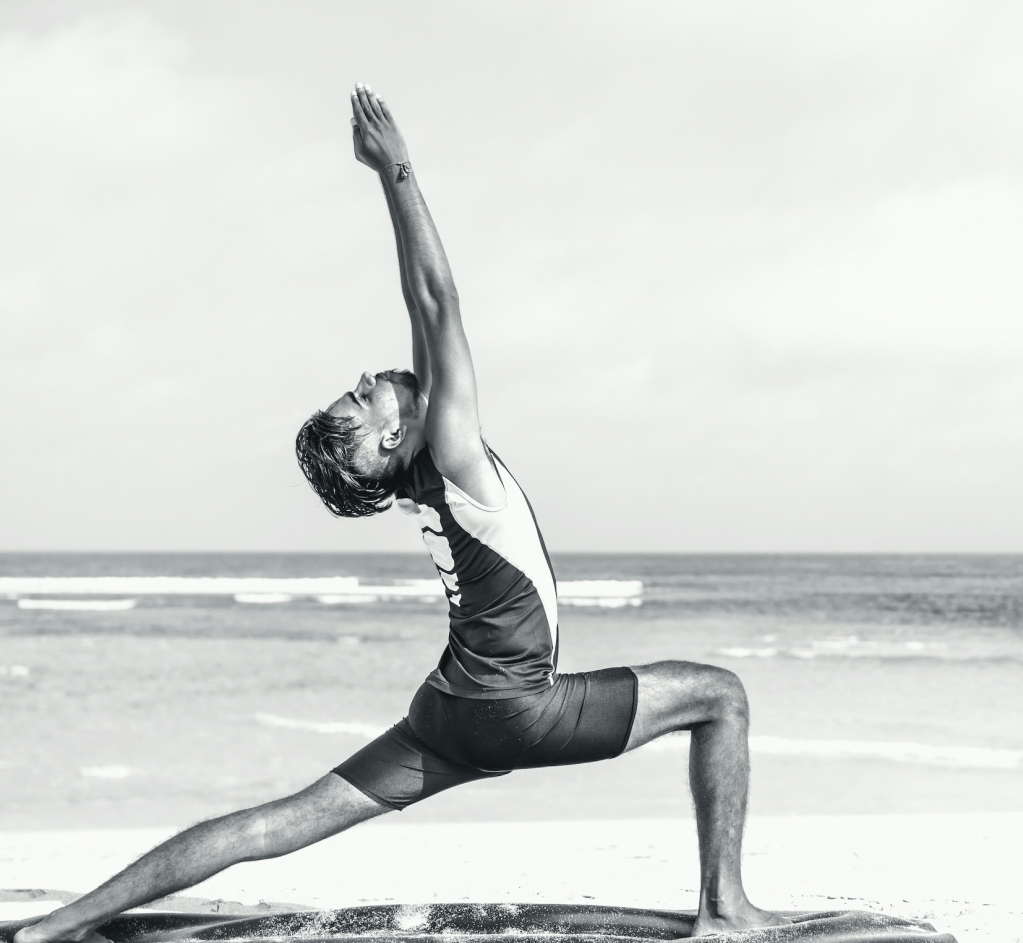
This is the part most people associate with Yoga: the physical postures, known as Asanas. The Sutras state that Asanas should be Sthira-Sukham, meaning steady and comfortable. The goal of practicing asanas is to enable the body to remain in a steady, stable position to pursue other steps of Yoga (like meditation). Therefore, good teachers emphasise holding postures rather than adding fancy acrobatics to your routine.
Pranayama
Prana, meaning life force, is fundamental in Yoga. It is closely associated with breath, so Pranayama refers to breathing techniques that help purify the body. Techniques include inhalation, holding the breath, alternate nostril breathing, and forceful exhalation.
Pratyahara
Pratyahara means withdrawal of the senses from the external world. This step is pivotal in the journey, transitioning from the external and bodily level to the inner level. Controlling the mind requires controlling the senses, so it is crucial to withdraw the senses from the external world to the inner world.
Dharana
Dharana means concentration. Our minds constantly wander, posing a significant obstacle in reaching the goal of Yoga. Dharana is used to reduce these fluctuations and achieve one-pointedness.
Dhyana
Dhyana means meditation. It is similar to Dharana but with one key difference: Dharana requires effort, while meditation happens effortlessly. Thus, Dhyana is the natural progression of Dharana.
Samadhi
The final stage is Samadhi. It represents the ultimate union, liberation, or a state of pure consciousness. Remember, these are merely borrowed concepts for us, so we can only strive to pursue this by following the preceding limbs of Yoga.
Patanjali’s Yoga Sutras
Now that we have discussed the Eight Limbs of Yoga, it’s time to delve into the Sutras of Patanjali. Ancient scriptures always require a good translation unless you know Sanskrit (hopefully someday in life). However, understanding these scriptures goes beyond mere translation. To grasp the spiritual knowledge of ancient maestros, I sometimes turn to our modern-day maestro (Osho, obviously). Here’s my summary of Osho’s commentary on Patanjali’s Yoga Sutras, based on three important sutras.
First Sutra
“Kayendriya siddhi ashuddhih ksyayat tapasah”
“Austerities destroy impurities, and with the ensuing perfection in the body and sense organs, physical and mental powers awaken.”
When understanding the body, there are always two camps: those who believe we are our body and that’s all, and those who believe there is more to us. Even for spiritual seekers who want to delve inward, they must start with their body. The most important step is to destroy impurities and make the body suitable for inner exploration. This is why austerity is required.
Impurities arise from our lifestyle. All yogic texts emphasise mastering the senses, but in reality, we often let the senses master us. Osho uses the analogy of food and the tongue. The tongue, like senses, is supposed to function as a watchman. However, we often eat whatever pleases the tongue, rather than what benefits our well-being. With an unhealthy body and mind, one cannot pursue other steps of Yoga.
Some people take the “You’re not your body” idea to the extreme, torturing their body. For example, fasting is a powerful technique to purify the body, allowing it to destroy toxins and dead cells. However, extreme fasting can hamper Yogic practice. The same holds true for Yoga Asanas and Pranayama. We live in our body, and only a healthy body enables us to embark on our inner journey.
Second Sutra
“Swadhyayat istadevata samprayogah”
“Union with the divine happens through self-study – Swadhyaya.”
Once the body is purified, the next step is Self Study. Patanjali doesn’t tell us to visit temples or religious sites; he asks us to move inward and study ourselves. This means observing our actions and being aware of changes in our thoughts, emotions, mood swings, etc. Osho talks about the power of observing, calling it the ultimate test of sin vs. virtue. If something disappears when you observe it (like anger, hatred, jealousy), it is a sin. If something grows when you observe it (like happiness, love, compassion), it is a virtue. Meditation is the act of observing ourselves and being aware of changes.
Third Sutra
“Samadhi siddha Ishwar pranidhanat”
“Total illumination can be accomplished by surrendering to God.”
The final step is surrendering to God. This concept can be understood in various ways: literally surrendering to a deity, or surrendering to a higher level of consciousness. I prefer the latter, as the philosophies defining Yoga (whether Samkhya or Vedanta) see it in terms of consciousness (Purusha and Brahman).
Surrendering is considered both crucial and difficult, whether to a deity or the inner self.
Superficially, it might seem easy, but true surrender is challenging. One might try to surrender with strong will and effort, but these efforts are part of our ego. It is our very ego that prevents true surrender. True surrender happens naturally as the ego dissolves, following the paths of the previous sutras.
As Osho puts it, in his classic Osho style: “Surrendering is a happening, not a doing.” Thus, the third sutra describes a natural process that precedes the state of Samadhi (the ultimate union).




 Nepali Wanderer
Leave a comment