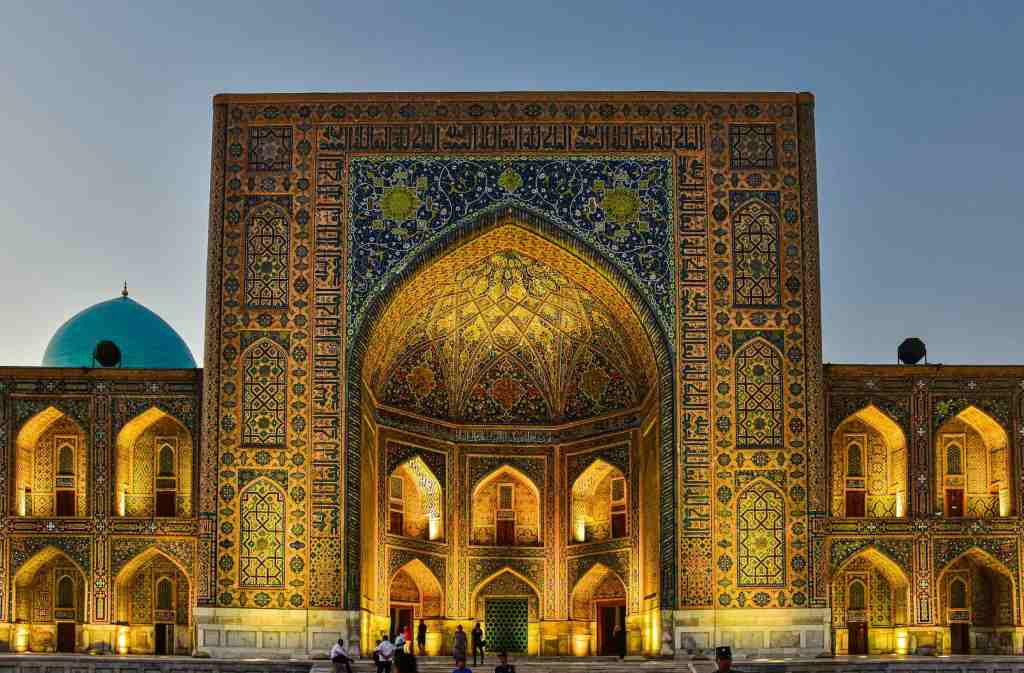
Photo by AXP Photography
Throughout much of recorded history, the world revolved around the familiar continents of Europe, Asia, and Africa, while distant lands like the Americas and Australia remained largely unexplored. Despite vast distances separating them, these regions were far from isolated, thanks to the remarkable Silk Road.
The Silk Road wasn’t a single road but rather a complex network of trade routes connecting the East and the West. It was the lifeline of commerce, culture, and ideas, linking China, South and East Asia with Europe through the heartlands of Central Asia and the Middle East. While commonly known as the Silk Road, it encompassed numerous paths, prompting some scholars to prefer the term Silk Routes.
Formally established in 130 BC during China’s Han Dynasty, the Silk Road’s history stretches back even further, with its origins rooted in what is now modern-day Iran. Its name, “Silk Road,” reflects the significance of silk in its trade. Silk was more than just a commodity, it was a symbol of luxury and mystique. Its production was a closely guarded secret of the Chinese, so much so that the Greeks and Romans referred to China as “Serica,” the land of silk.
The Silk Road wasn’t merely a thoroughfare for the exchange of goods; it was a bustling corridor of ideas, culture, and faith. Whether it was the transmission of Greek and Roman philosophies to the East or the spread of Eastern beliefs and religions to the West, the Silk Road played a pivotal role in the dissemination of knowledge across the known world at the time.
Yet, amidst the flow of silk and ideas, there was another commodity that left an indelible mark on history: spices. Spices played a pivotal role in filling the half-empty maps of the world known at the time.
Originating from the tropical regions around the Indian Ocean, including present-day South India, Sri Lanka, and the islands of Malaysia and Indonesia, these aromatic treasures not only added flavor to food but also served as essential preservatives in an era without refrigeration. Given the high demand for spices, some historians even dub the Silk Roads as ‘Spice Roads.
Cities situated along the Silk Roads thrived, with notable examples including Merv in Turkmenistan, Samarkand in Uzbekistan, Damascus in Syria, and Istanbul in Turkey. In Europe, countries and cities on its eastern side — closer to the Silk Roads — experienced greater prosperity. This proximity to the trade routes played a significant role in the influence and grandeur enjoyed by the Greeks and Italians for centuries. Cities like Venice, in particular, became symbols of opulence and wonder in the West.
As we discussed in our previous story, the era of the Mongols marked the peak of the Silk Road’s influence. However, with the decline of the Mongol Empire, the once-secure passage of the Silk Roads fell into uncertainty. Consequently, Europeans sought an alternative route to acquire the highly coveted silks and spices, driving the imperative for exploration.
Now, here’s a curious thought: why didn’t the Indians or the Chinese ‘discover’ Europe first? As a kid, I would often think it was because the Europeans were simply far more advanced. However, a deeper look reveals that Asia held the bulk of global wealth, with India and China alone dominating two-thirds of the world economy at one point. While we shouldn’t overlook Europe’s maritime advancements or their daring spirit, it’s essential to recognize the sophistication of the East. For instance, Chinese explorer Zheng He made significant maritime expeditions before the eras of Columbus and Vasco da Gama.
Therefore, Europe’s drive for exploration was fueled by necessity. The demand for Eastern products like spices in the West, combined with Europe’s competitive empires vying for control of the spice trade, spurred innovation and exploration.
Accounts of explorers like Marco Polo inspired Europeans to seek the riches of the East. A renowned Italian (whose story we’ll delve into soon) set off on his journey with Marco Polo’s book in hand. His correspondence with sponsoring monarchs emphasized the value placed on the Indies and China — lands rich in spices and silk. Thus, it was the Silk Road that catalyzed Europe’s pursuit of exploration.
But here’s the catch! To purchase these exotic spices, Europeans needed something valuable in the East— gold and silver! And where was gold abundant? Along the western coast of Africa, known as the Gold Coast. So, our next destination is the heartland of Africa!






 Nepali Wanderer
Leave a reply to Our Story on Earth – Nepali Wanderer Cancel reply