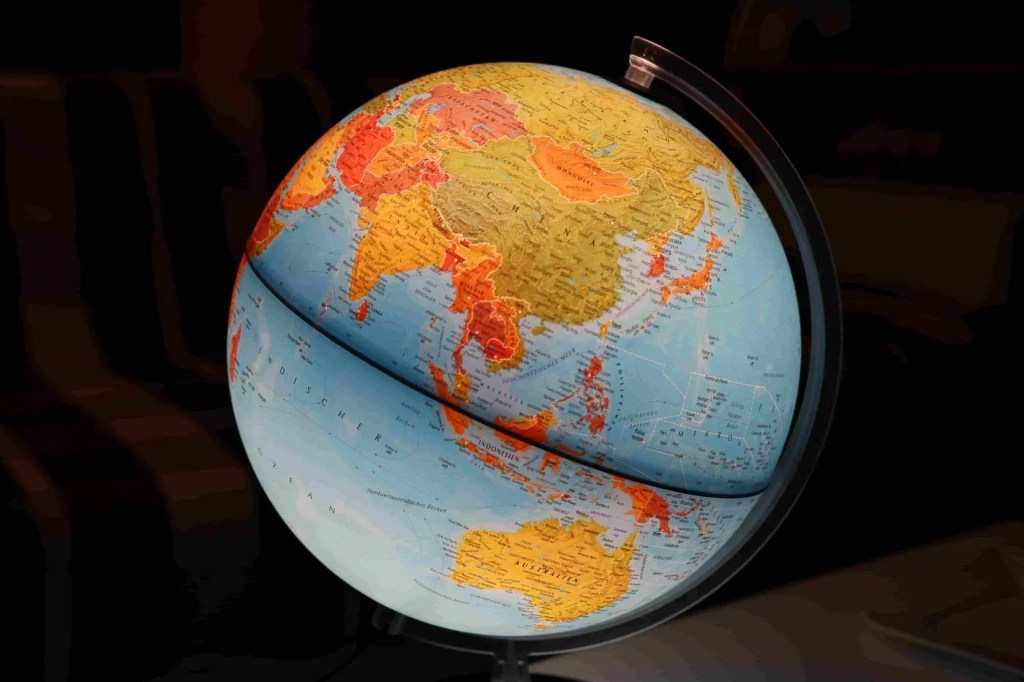
When Columbus landed in the newfound land, he and his team genuinely believed they had reached the East Indies. This misconception led them to call the indigenous people they encountered ‘Indians’. Columbus died in 1506 without realizing he had discovered a new continent. Only after his death did Europeans add the newfound land to their maps, naming it America.
However, it was not the densely populated Aztec or Inca empires that Columbus first encountered. Instead, he arrived in the Caribbean Islands, which were relatively primitive compared to the grand civilizations he later sought. Initially, apart from exotic birds and animals, Columbus and his team found little of material wealth to bring back to Spain. But eventually, they stumbled upon the land of their imagination—filled with gold and silver—in the Aztec and Inca empires.
In 1521, Spanish conquistador Hernan Cortes discovered the Aztec Empire and eventually conquered it, establishing a Spanish colony. Similarly, in 1532, another Spanish conquistador, Francisco Pizarro, discovered and conquered the Inca Empire. Within a few years, European intruders, primarily Spanish, had overthrown two sophisticated civilizations and established Spanish colonies throughout Central and South America, as well as the Caribbean islands.
The Spanish intruders possessed far more advanced weapons, such as guns and steel swords, which the native Americans had never seen. For the Native Americans, who had never encountered guns, horses, or ships, the sight of men emerging from ships, riding horses, and wielding guns must have seemed like an alien invasion.
But it wasn’t the guns and intimidation alone that decimated the native populations. It was the germs. The Native Americans were exposed to diseases brought by the Europeans to which they had no immunity. Epidemics of smallpox, measles, and mumps decimated almost 90 percent of the native population.
Spain benefited immensely from these conquests, initially reaping the rewards of the newly discovered and conquered lands. However, the Spanish Empire soon realized it had strayed from its original goal: finding a route to the land of spices. Meanwhile, Portugal had established important trade routes along the coasts of India and the East Indies. Spain, too, desired a route to the spices.
There was, however, a problem. As the two Iberian nations had begun their explorations during the same era, disputes over newly discovered routes and lands were inevitable, as seen in their earlier conflict over the control of the Canary Islands. To resolve potential conflicts, they signed the Treaty of Tordesillas in 1494, just two years after Columbus’s first voyage to the New World.
The Treaty of Tordesillas divided the world outside Europe between Portugal and Spain along a line 270 leagues west of the Cape Verde Islands. Portugal received everything east of this line, which included control over Africa, Asia, and eastern South America, while Spain received everything to the west, most of which was still unknown at the time. This division granted Portugal control over Brazil, explaining why Brazil is the only Portuguese-speaking country in South America today.
Given Portugal’s exclusive control of the eastern routes via Africa due to the treaty, Spain had to devise an alternative route to the spices. Ironically, it was a Portuguese navigator who helped Spain circumvent Portugal’s dominance. Ferdinand Magellan, having fallen out with the Portuguese monarchy, promised the Spanish monarchs that he could find a westward route to the East Indies.
In 1519, Magellan set out to find the East by sailing west, operating under the well-known understanding that the Earth is round. However, he underestimated the vastness of the ocean between the Americas and Asia. The ocean he encountered was so vast and tranquil that he named it the Pacific, meaning peaceful. Magellan and his crew eventually reached the Philippines, which later became part of the Spanish Empire, named after King Philip II of Spain.
Magellan died in a battle against the locals in the Philippines, but his crew completed the journey, returning to Spain in 1522, three years after they had set out. This expedition became the first recorded circumnavigation of the globe, with Magellan celebrated as the leader of the first global voyage, despite not surviving the entire trip. Fittingly, this achievement by a navigator linked to both Portugal and Spain highlighted the era of Iberian exploration.
However, in the following years, Iberian influence began to wane. Northern European nations soon ushered in the next era of exploration. In a twist of fate, a tiny nation that had seceded from the Spanish Empire would pioneer this new age.
Next up is a tale about that tiny nation.






 Nepali Wanderer
Leave a comment