
As I sat on the roof with a newly found guitar in my hand, I knew exactly which song I would play. About to strum after more than a year, in a new country surrounded by people I had only just met, I had to pick a song that I could play even when drunk. As I played my go-to song, I could see my own guitar journey hidden within the lines. And between those lines, I could see my own life journey and the paths I had taken.
“Another turning point, a fork stuck in the road.
Time grabs you by the wrist, directs you where to go.
So make the best of this test and don’t ask why.
It’s not a question, but a lesson learned in time.”
I first tried to learn guitar when I was 15. In Nepal, the three-month break you get after 10th grade (the famous SLC break) is the first truly long break in life. It is one that every teenager dreams about with anticipation, imagining all the things they could finally do outside the routine of studies. My dream was to learn guitar during that break, and I joined a nearby guitar training centre with two friends. Surely three months should be enough — or at least that’s what we thought!
But trying to learn something is a completely different game. The initial fascination soon collides with the discipline of practice. Be it learning one chord after another (which felt like rote memorisation after a point), or the painful fingertips that refused to produce the same sound effortlessly created by the teacher, it was tough! And as always, it didn’t take long for the brain to make difficult things feel less important. From the comforting excuse of “I need to focus on entrance exams” to staying up for midnight Euro 2008 football matches, I found more excuses than motivation to attend my lessons. Eventually, I dropped out after a month.
But I had learned two important things during that short time: how to play a few chords, and more importantly, how to strum rhythms on a guitar. Those two small foundations would quietly help me later in my journey, about two years down the road.
The time after finishing 12th grade is another important turning point in life. It is the phase that shapes the next few years of your life, and often much longer. While juggling life-defining questions like what to study (which branch of engineering, since the engineering part was already decided) and where to study (the US or India), I also had enough free time to learn other things. And luckily, I had a friend willing to teach me how to turn those few chords and rhythms into something tangible: full-fledged songs that I could play and confidently say that I “knew” guitar.
That was when I learned my first song: a Nepali song called “Aaudai Jadai” by Uglyz. Other easy songs soon followed, including the song from the beginning of this story, “Time of Your Life” (originally titled Good Riddance) by Green Day.
The next milestone in my guitar journey was India, where I had gone for my bachelor’s in engineering. As they famously say there, students first do engineering and then figure out what they actually want to do with life. No wonder I found myself surrounded by students buoyed by the freedom of hostel life, always open to exploring something new. By then, I had also grown confident enough to play a few songs, including the famous “engineering hostel life” guitar anthem of that era, “Give Me Some Sunshine” from the movie 3 Idiots.
A few rooms away lived a cool friend with a guitar, from whom I learned “Hey There Delilah” by Plain White T’s. With that song, I entered the seemingly cool but difficult world of fingerpicking.
But that friend left college after the first semester, which meant the next three years went by endlessly recycling the same small stock of songs. Looking back now, even that occasional “practice” mattered. It helped me retain the physical, if not entirely mental, touch of playing guitar. More importantly, it quietly taught me one important life lesson: sometimes it is important just to keep things moving, even when you are not moving fast (basically what I am doing with my Duolingo now, lol).
Then came another important break in life. In 2015, after finishing my bachelor’s degree, I found myself at yet another turning point. Once again, caught between questions of what and where to study next, I found another opportunity to continue my guitar journey.
This time, I found my teacher in my younger cousin, who had improved tremendously at guitar. Since he was my little brother, whom I could shamelessly bother for long periods, I decided to aim slightly higher. I picked a song by my favourite band, “Wish You Were Here” by Pink Floyd.
Learning to play the intro section, and eventually almost the entire song (except, of course, the impossible final solo), felt like a genuine breakthrough. Along the way came a few other classics, tougher chords, and the gradual ability to sense rhythms simply by listening to a song. I remember feeling jubilant when playing that clean B minor chord! (B minor is tough for a beginner, don’t judge!)
Then came another phase: my master’s in Spain. I especially remember playing one song during our college gatherings — Señorita from movie Zindagi Na Milegi Dobara, a Hindi-Spanish song that somehow perfectly captured that stage of life. Even now, whenever I play it, memories of both India and Spain rush back together.
By 2018, I was back home in Nepal. The inevitable career phase had arrived — that lifelong cycle of searching for a job, then a better job, then the “right” job, only to later wonder whether such a thing even exists. After a few years, my career began to mirror my guitar journey: endlessly recombining the same limited set of skills in the name of creating something meaningful. It felt as though I needed another turning point in life. Another break to interrupt repetition. Another spark.
This time, I found it in an ashram in Kerala, India.
In January 2023, I went to an ashram in Kerala to learn yoga for a month. I wanted to add a new dimension to a life that often felt like it was flowing everywhere and nowhere at once. There again, I encountered a guitar, and a few friends happy to sing together and enjoy that same limited stock of songs. More importantly, I finally got the opportunity to do something I had always wanted to do (but never quite had the courage for): perform on stage.
A different country, people I had only just met, and a setting centred around yoga rather than music — I knew it was the ideal opportunity. To play it even safer, I chose a Nepali song, hoping that even the mistakes would go unnoticed. I played “Aaudai Jadai” by Uglyz, the first song I learned on guitar.
Standing on that stage, I remember slipping into that flow state: one moment completely unaware of the crowd, the next suddenly noticing faces looking back at me. At times, it almost felt like forgetting myself entirely and simply becoming part of the music. Somewhere in that flow, without even planning it, I started another song — Knockin’ on Heaven’s Door by Guns N’ Roses.
That one month transformed more than just my yoga practice. It reignited my guitar journey. I started dedicating more time to guitar again and pushed myself toward more difficult songs. Eventually, I managed to play what had always felt like the ultimate milestone for me: “Stairway to Heaven” by Led Zeppelin. Except, of course, the final solo. (Why is life full of these “excepts”?)
I even began learning a bit of music theory: chord families and scales. As always, the initial burst of enthusiasm eventually faded, leading to another long phase without playing guitar. But even that small theoretical understanding accelerated my learning later on, helping me memorise songs much faster.
Still, something was missing. I had become somewhat familiar with the “how” of guitar — how chords fit together and sound good — but the deeper “why” still escaped me. To find that answer, I once again had to travel through both time and space.
That moment arrived two years later, in South Sudan.
In a life filled with confusion punctuated by occasional islands of clarity, one thing had always remained constant: the desire to know more. To know more about the world, and also more about myself. That curiosity transformed an otherwise cautious nerdy person into someone constantly seeking unfamiliar places, challenges, and adventures.
It was that same urge to explore that eventually took me to South Sudan for work.
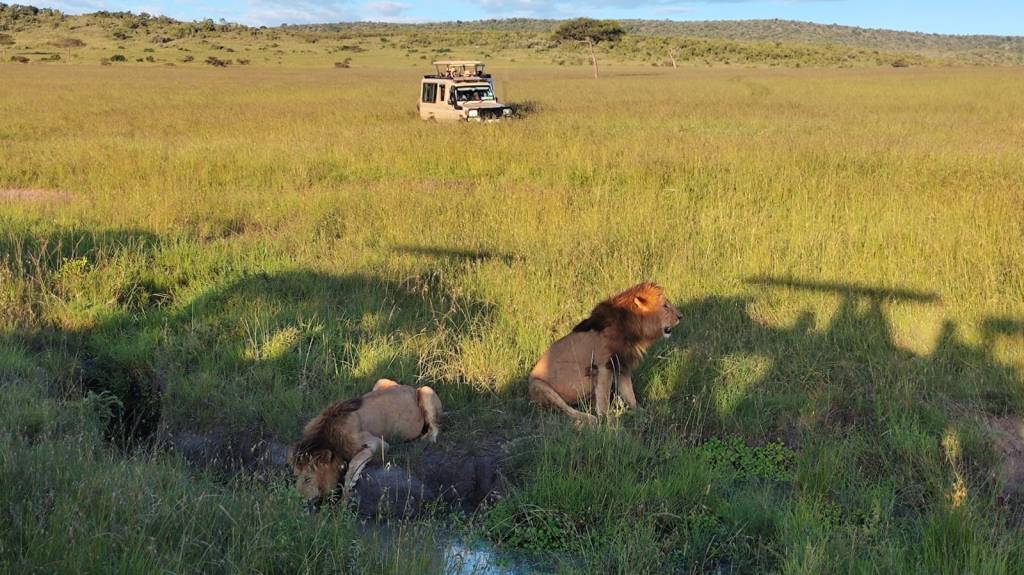
Life in Juba, South Sudan, was unlike anything before. Confined within a closed compound where you worked and slept in the same building, unable to walk more than a couple of hundred metres alone, I suddenly found myself with more free time than ever before. One random Friday, a friend played a song on the roof. That song. “Probably” just a mere coincidence — which we humans love to see as fate — it was Time of Your Life.
Hearing it, I casually remarked, “Wish I could play it on guitar now.” Only for him to mention there was a guitar lying (mostly untouched) in his room, left behind by a previous colleague.
And just like that, through one small serendipitous moment, the journey restarted again.
This time, with more free time than ever before, I decided to finally explore the missing “why” behind guitar.
Until then, my learning style had always been practical first: learn a song, and then learn whatever was necessary to play it. Similar to how many of us amateurs learn other skills (like programming) — by building something tangible rather than getting bogged down with theory. I continued the same way, trying to understand why certain chords naturally sounded good together.
But that curiosity soon led to a deeper question: where (or how) did these chords pop up in the first place?
The seemingly natural, alphabet-like world of A, B, C, and D chords suddenly stopped feeling so natural and obvious. I found myself wondering why an A chord is shaped the way it is! I started reading detailed articles in random places — sometimes even sitting alone in juice shops — discovering concepts like chord construction and new terms like root notes. But before I could fully absorb one discovery (like root notes), another question would pop up. Like what exactly is a note?
The deeper I went into the basics, the more I realised what I truly needed to do. It was time to finally go back to the foundations — to learn music from first principles.
Thus, what started as random YouTube videos and scattered articles eventually led me to a music theory course on Coursera. There, I started from the absolute beginning: sound itself. How sounds relate to notes. How combinations of notes create chords. How chord families emerge from combinations of notes. How the same Sa Re Ga Ma that you heard in childhood quietly connects to everything.
It was fascinating to realise how songs are structured almost like stories with ups and downs, with their own tension and release. Delving deeper, I even went back to Pythagoras and the mathematics hidden behind harmony itself: why certain combinations of notes sound pleasing, and how even a single musical tone is made up of multiple frequencies layered together. (See this mathematics sneaking in everywhere!)
Eventually, as always, life happened (see, another excuse), and my learning hit another plateau. But for those first six months, and even the following year, guitar once again became a source of intense curiosity and my favourite companion in South Sudan.
Of course, there exists an entire universe of guitar knowledge far beyond these basics, mastered by professionals far more skilled than I could imagine. But for someone who had spent years mechanically memorising songs without understanding , it felt like discovering some hidden map.
Now, in 2026, I am once again back home in Nepal, taking yet another break in life. As I reflect on this long, uneven guitar journey, it brings a smile to my face. There are galaxies left to explore before I can truly understand guitar. But throughout this journey, it has continuously reminded me of the joy of learning — that feeling of bliss when you delve into the “why” behind things and discover more.
Every time I reflect on my guitar journey, I can’t help but also reflect on two other things moving in parallel: my career and life itself. For those two, there is an even longer road ahead before I can uncover the hidden “why.”
Like that famous quote goes, “Life can only be understood backwards, but it must be lived forwards.”
Thus, all I can really do is stay calm and keep moving forward. And as for wondering whether this current break is yet another turning point, I return once more to the lyrics from the beginning — only this time, finishing with the final two lines:
“It’s something unpredictable, but in the end it’s right.
I hope you had the time of your life.”






Leave a comment