I clearly remember my first evening in Masai Mara National Reserve. Masai Mara is known for its Big Five, but I mostly cared about my own Three. And two of them, I had already seen within my first hour in the wilderness. So by evening, I found myself silently hoping, almost praying, for that final one. I kept telling myself I would be perfectly happy even if I saw nothing else, as long as I got to witness that one animal in the wild.
And finally, after nearly two hours of driving through the grasslands, we saw it. Or rather, them.
Not one, but two lions resting near a water source at dusk.
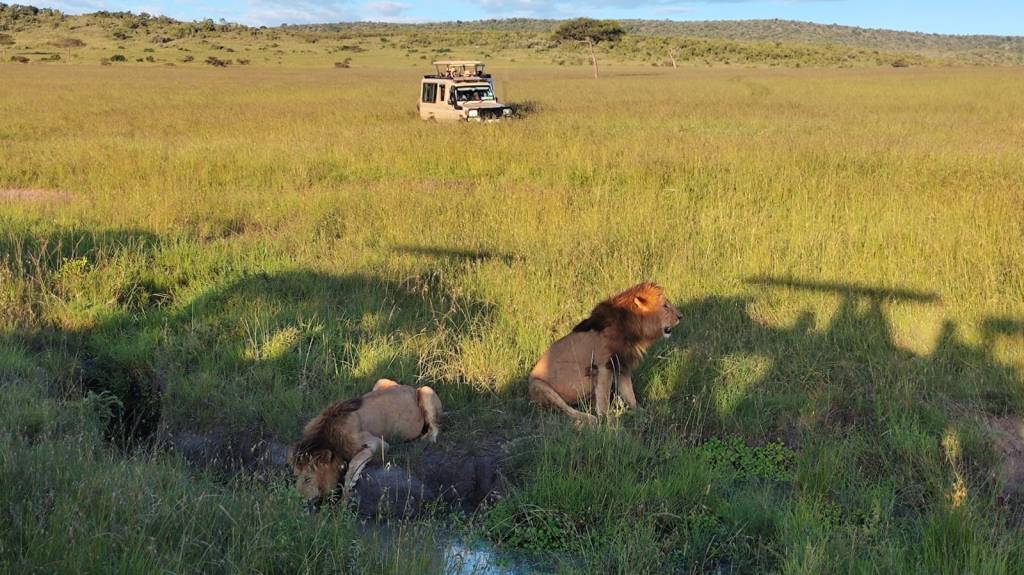
It was my first experience seeing lions in the wild. At that moment, I felt strangely relieved, as if the entire journey had already justified itself. But I was soon to discover another thing. That Masai Mara is far more than just zebras, giraffes, and lions. And Kenya, as a country, is far more than just Masai Mara.
Growing up in Nepal, wildlife mostly meant jungles like Chitwan National Park. But when it came to the imagination of the African wilderness, one place always appeared first in my head: Masai Mara. It always felt distant. Exotic. Expensive. Not exactly a common destination for someone from Nepal. So traveling there was always a pipe dream.
Fortunately, work eventually brought me to Eastern Africa. Which meant that during my first break there, I decided to travel to Kenya and visit Masai Mara.
Masai Mara is one of Africa’s most famous wildlife reserves, known for its vast savannahs, rich wildlife population, and the Great Migration that happens between Kenya and Tanzania every year. It is also one of the best places on Earth to spot the Big Five: lion, leopard, elephant, rhino, and buffalo.
Ironically, the three animals I cared most about were zebra, giraffe, and lion. Not because they were the rarest, but because I had never seen them before.
Okay, technically I had seen lions in zoos, but that did not count. Meanwhile, elephants and rhinos, as magnificent as they are, felt oddly familiar to me as a Nepali. I had grown up seeing them in Nepal.
The drive from Nairobi to Masai Mara took around four to five hours, though it hardly felt boring. The changing landscape itself made the journey memorable. On the way, we stopped at the breathtaking Great Rift Valley viewpoint.
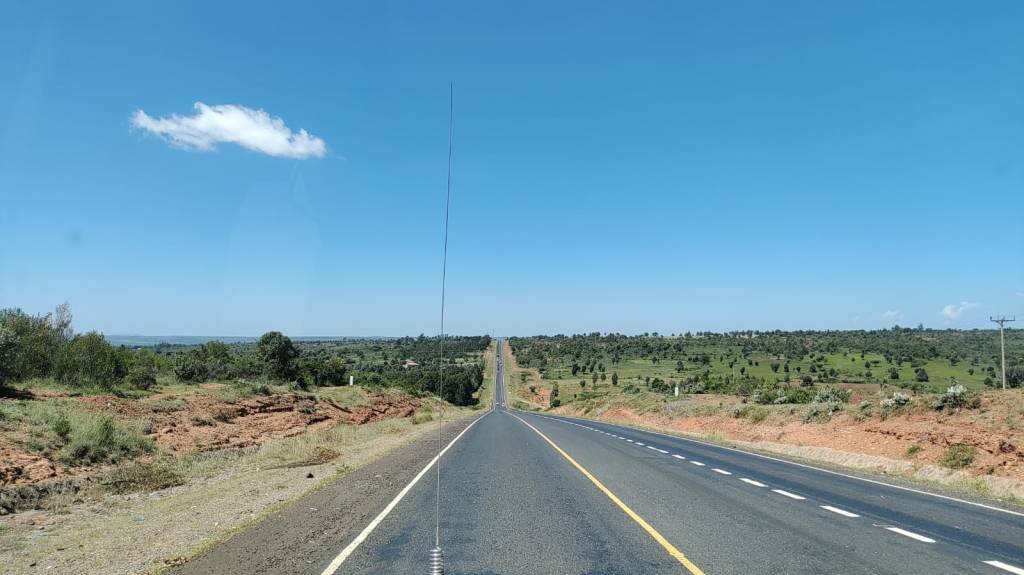
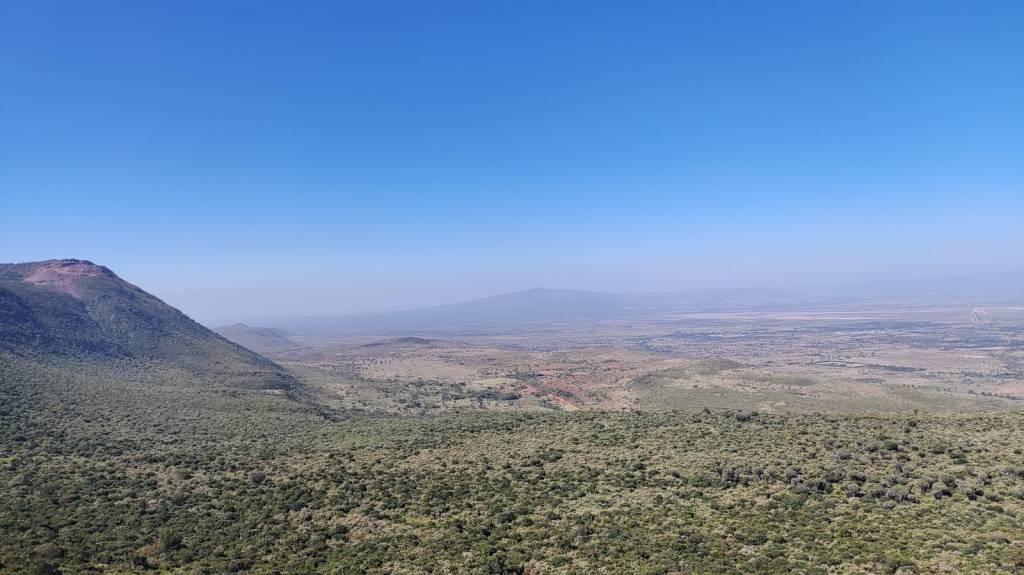
The Great Rift Valley is one of the most significant geological formations on Earth, stretching thousands of kilometers across Africa. More importantly, parts of this region are considered crucial to human evolution, as some of the earliest hominid fossils were discovered around the Rift Valley system. Standing there, looking over that enormous landscape, it was emotional to think how deeply pivotal this region is to our human origin.
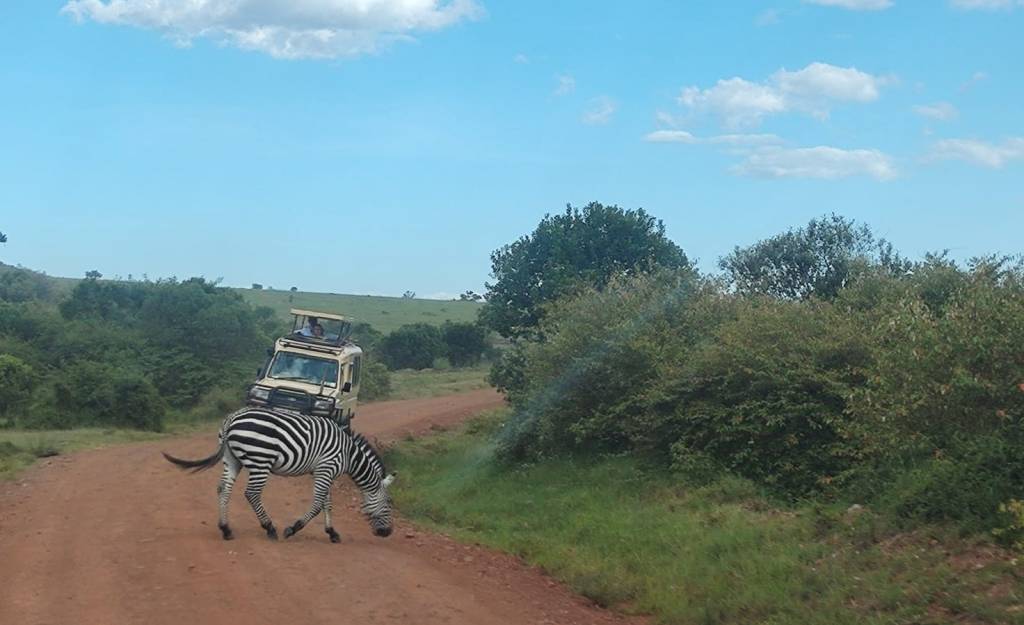
Not long after continuing the drive, I ticked the first animal off my list: zebra.
It felt emotional seeing one for the first time. An animal I had known since childhood through textbooks, literally through “Z for Zebra” in nursery grade. And now here one was, casually crossing the road in front of us. A literal zebra crossing.
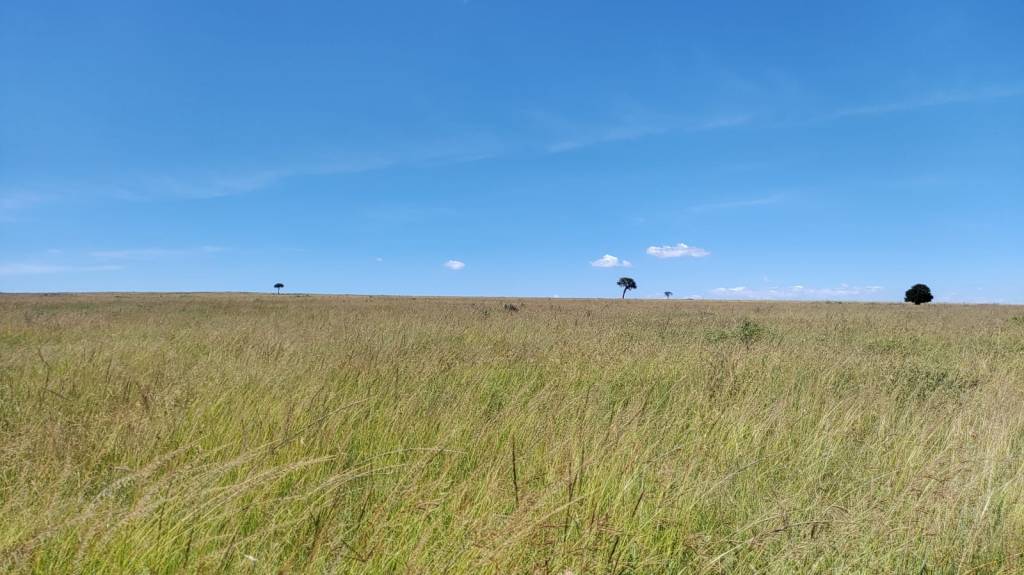
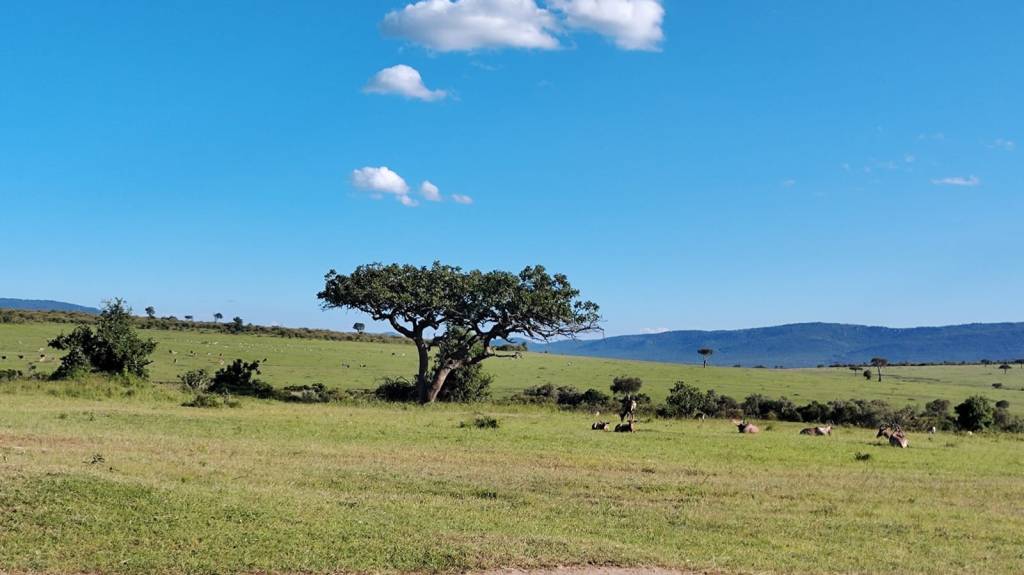
By afternoon, we reached our camp near the reserve. Everyone had their own tent-like hut, blending into the wilderness around us. After a quick refresh, we headed for the evening safari. And almost immediately, I was struck by the landscape. The endless green grasslands. And those iconic flat-topped acacia trees standing alone in the plains. The sight alone felt like something straight out of a Windows wallpaper.
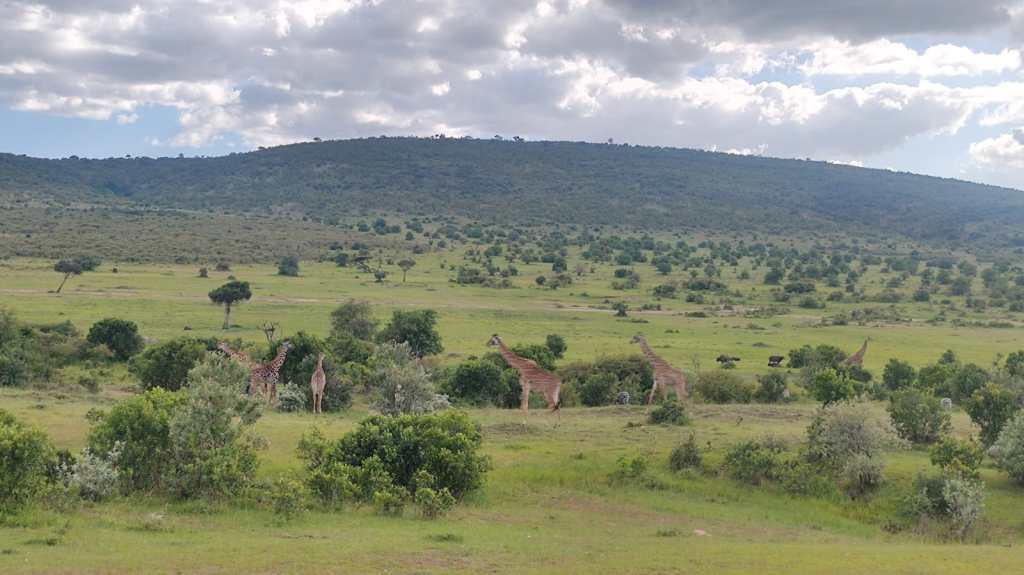
Soon after, the second animal on my list appeared: giraffe.
Seeing an animal so uniquely built in real life felt surreal. I immediately video called my parents back home in Nepal, turning the camera toward the giraffes. For years, I had told my mom (who is more into travel than my dad) that one day we would visit Masai Mara together. So even though she was thousands of kilometers away, I was happy that she was seeing it with me in some way.
As we continued deeper into the reserve, our guide told us January was not peak season. Sightings could sometimes be difficult. A friend had earlier warned me not to expect lions too confidently. Still, fingers crossed.
Then suddenly, through the radio communication between safari guides, word spread quickly:
“A lion has been spotted.”
The coordination between the drivers was honestly impressive. One sighting somewhere in the vast reserve, and somehow the information smoothly traveled from jeep to jeep. We drove toward the location holding our breath.
And then there they were.
Two lions resting near a water source as the evening sun faded behind the horizon.
One of them slowly got up and began walking closer toward our vehicle.
For a few seconds, everything became strangely silent inside me. Excitement. Awe. Fear. Disbelief. The kind of moment where your brain takes time to process reality. After taking in the moment for a while, I video called my parents again.
“Look. Lions.”
That first evening ended perfectly. Back at camp, we had dinner under the night sky, sat around a bonfire, and simply relaxed. Mission accomplished, I thought. Little did I know the next day would make me appreciate Masai Mara far beyond that first lion sighting.
The next morning, we started at 6 AM. And that day completely changed how I viewed wildlife.
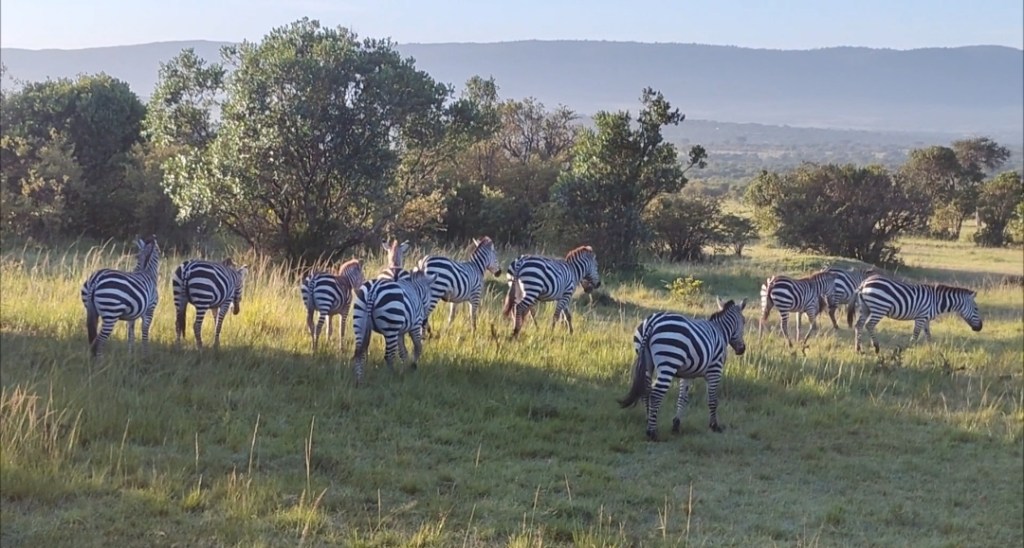
Right within the first hour, we saw enormous herds of zebras running together across the plains in full flow. The movement almost looked choreographed, like black-and-white waves rolling through the grasslands.
Then came hyenas.
Before visiting Africa, I had never noticed hyenas that much, not even in wildlife documentaries. But seeing them in person was fascinating, especially the way they ran, their posture, and how intimidating they looked up close.
We also spotted several African buffaloes, antelopes, and gazelles.
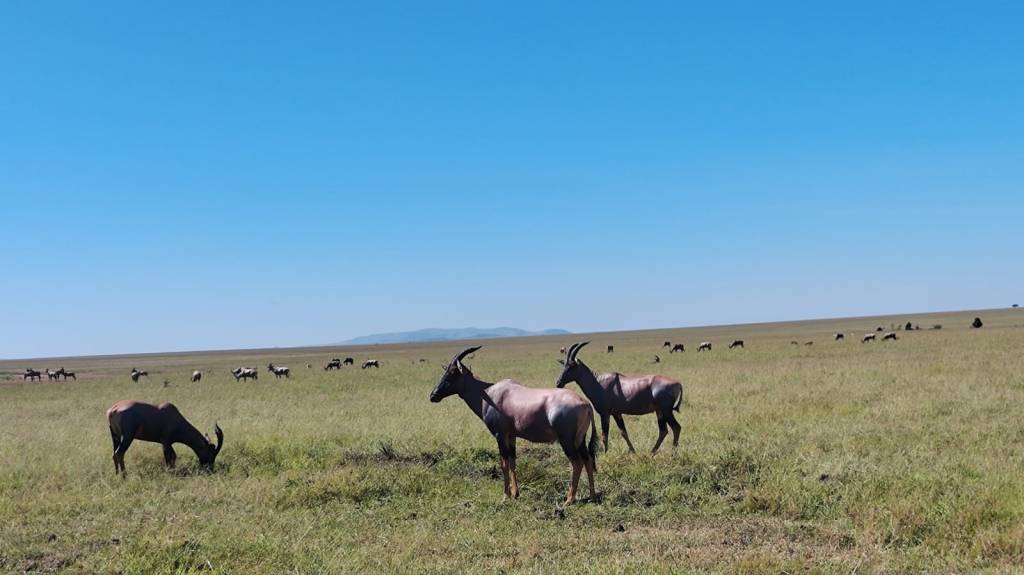
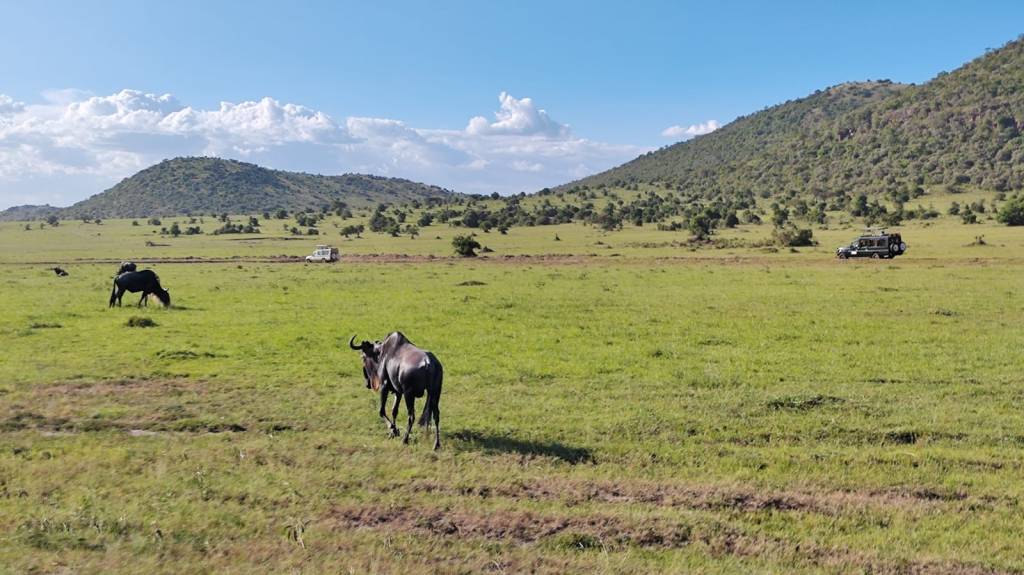
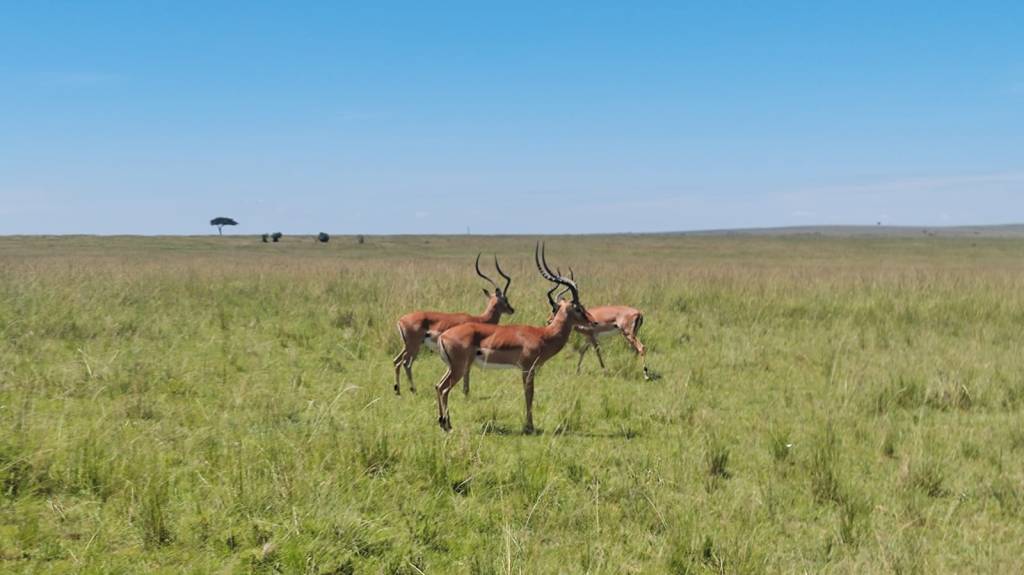
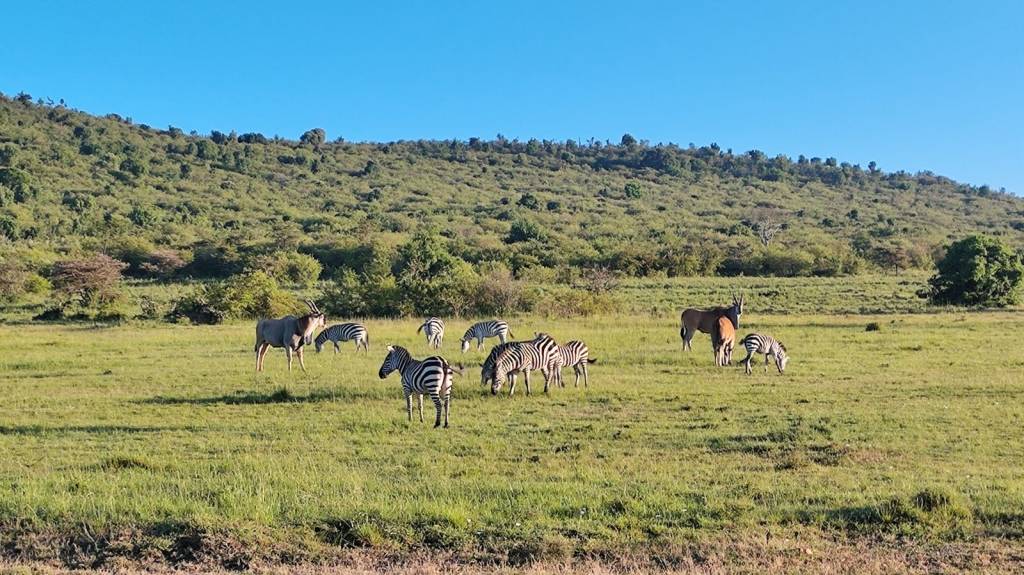
Then came the moment everyone suddenly became alert for:
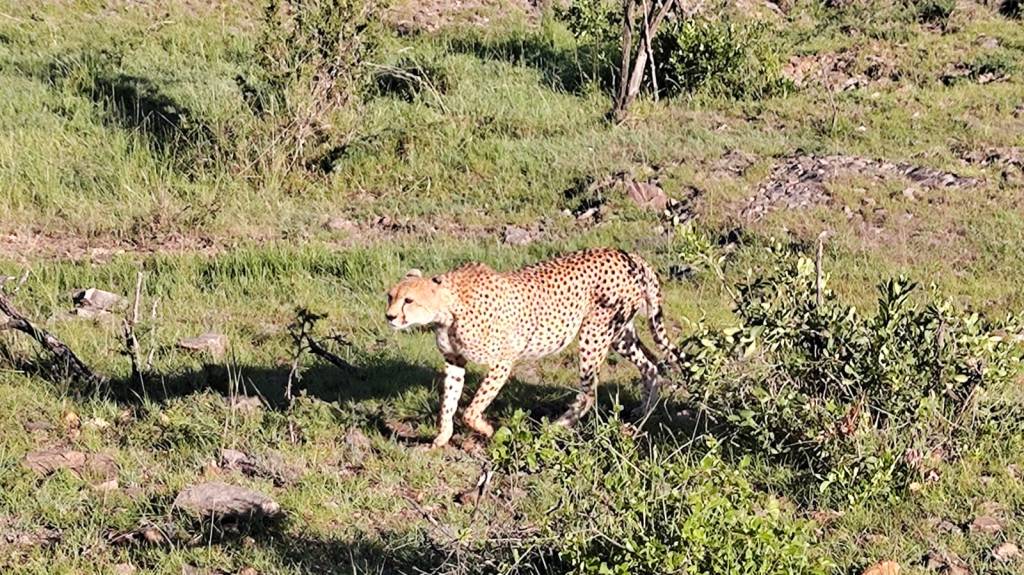
Leopard. Or maybe cheetah.
And until then, I honestly thought they were the same. Only for our driver-cum-guide to explain that cheetahs are slimmer, built for speed, and usually easier to spot in open grasslands. Leopards, meanwhile, are more muscular, elusive, and masters of camouflage.
And leopards were definitely much harder to spot. After the news about one leopard spread, dozens of safari jeeps began gathering in one spot, creating a kind of traffic jam in the middle of nowhere. Everyone pointed toward a bush far away. And after several minutes of squinting, I managed to see… a tail.
Just the tail.
(Does it count?)
Of course, lions continued to dominate the day.
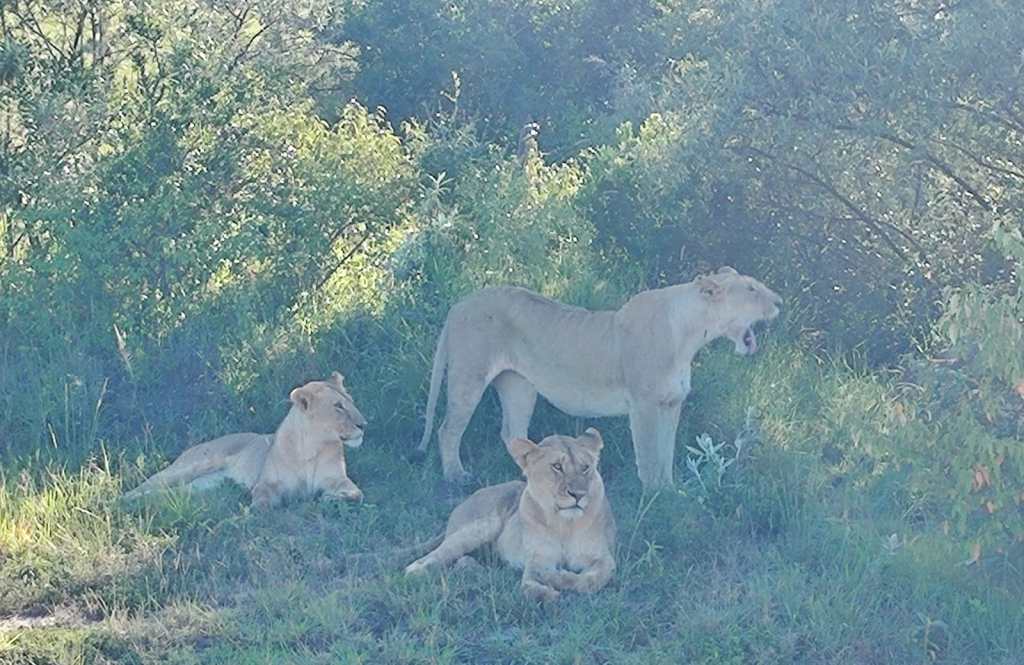
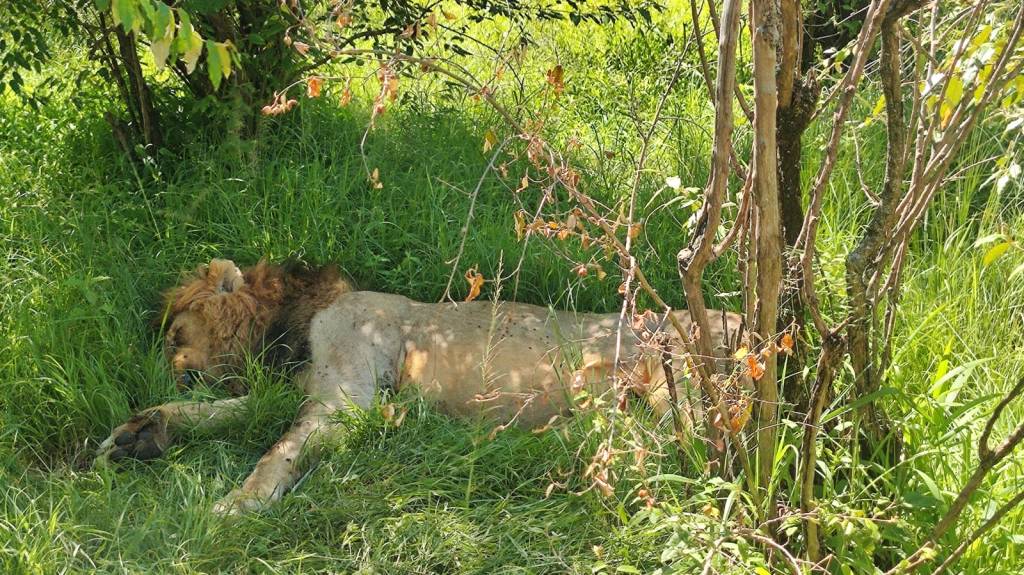
Lions resting. Lions sleeping. Lions walking. Lions crossing roads.
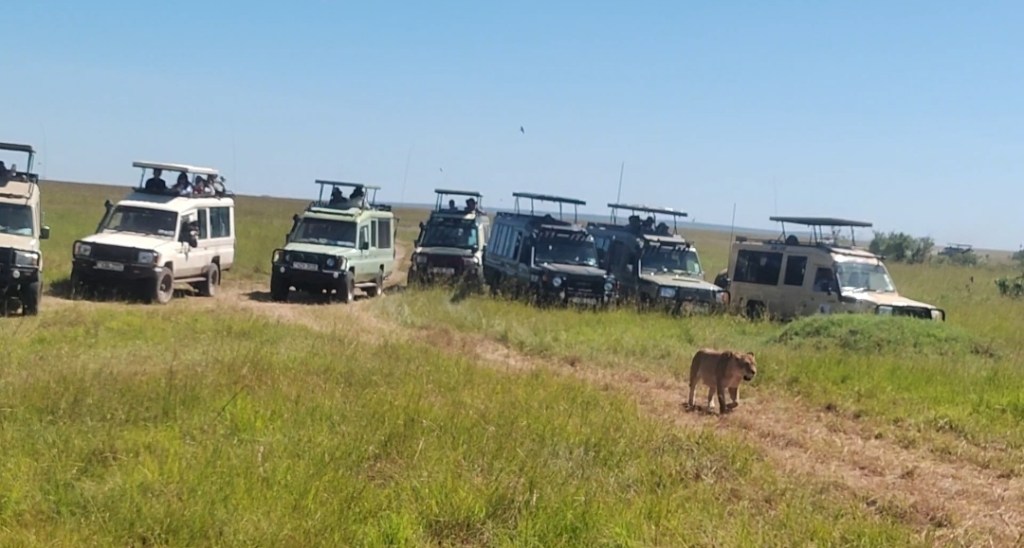
At one point, a single lion walked calmly along the grasslands while multiple jeeps followed behind it in parallel. It genuinely looked like one of those slow-motion hero-entry scenes from a South Indian movie, complete with that classic “Lion always comes alone” dialogue.
We also saw many other animals and birds whose names have now faded from memory (I am horrible at knowing the names of animals and plants!). And yes, we did see elephants. A lot of them. While many tourists were understandably emotional about seeing elephants, I found myself appreciating them with a different kind of familiarity. They reminded me of home.
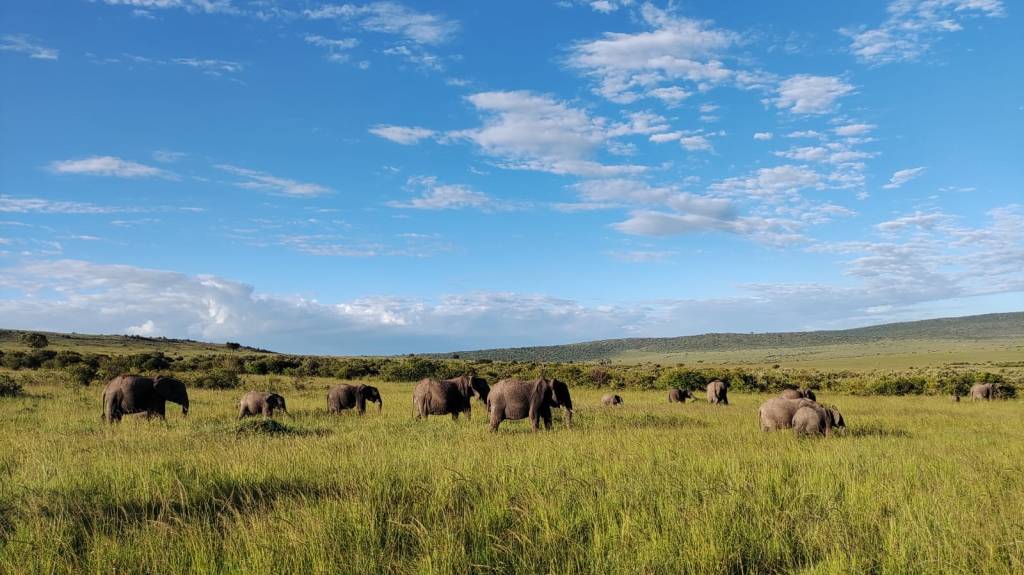
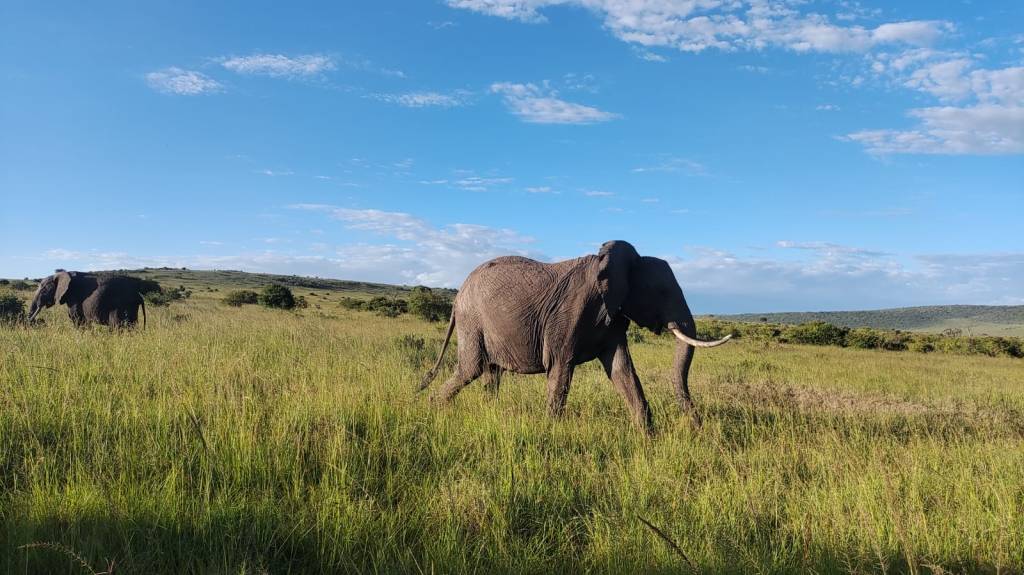
And no, we did not see rhinos. While some visitors were disappointed about this, I found myself oddly okay with it, coming from the land of rhinos. (No dear Rhino, I am not taking you for granted!)
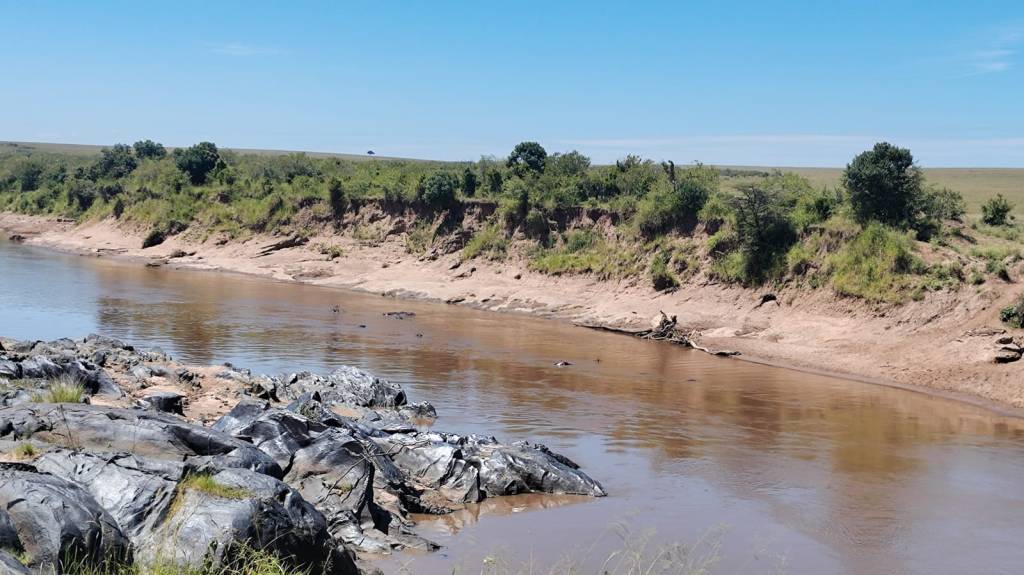
Later, we stopped near the Mara River, famous for its hippos and crocodiles.
We had lunch there while watching hippos floating lazily in the water nearby. The river also plays a major role during the Great Migration, when millions of wildebeests and zebras move between Masai Mara and Serengeti National Park in search of greener pastures. It is considered one of the greatest wildlife spectacles on Earth.
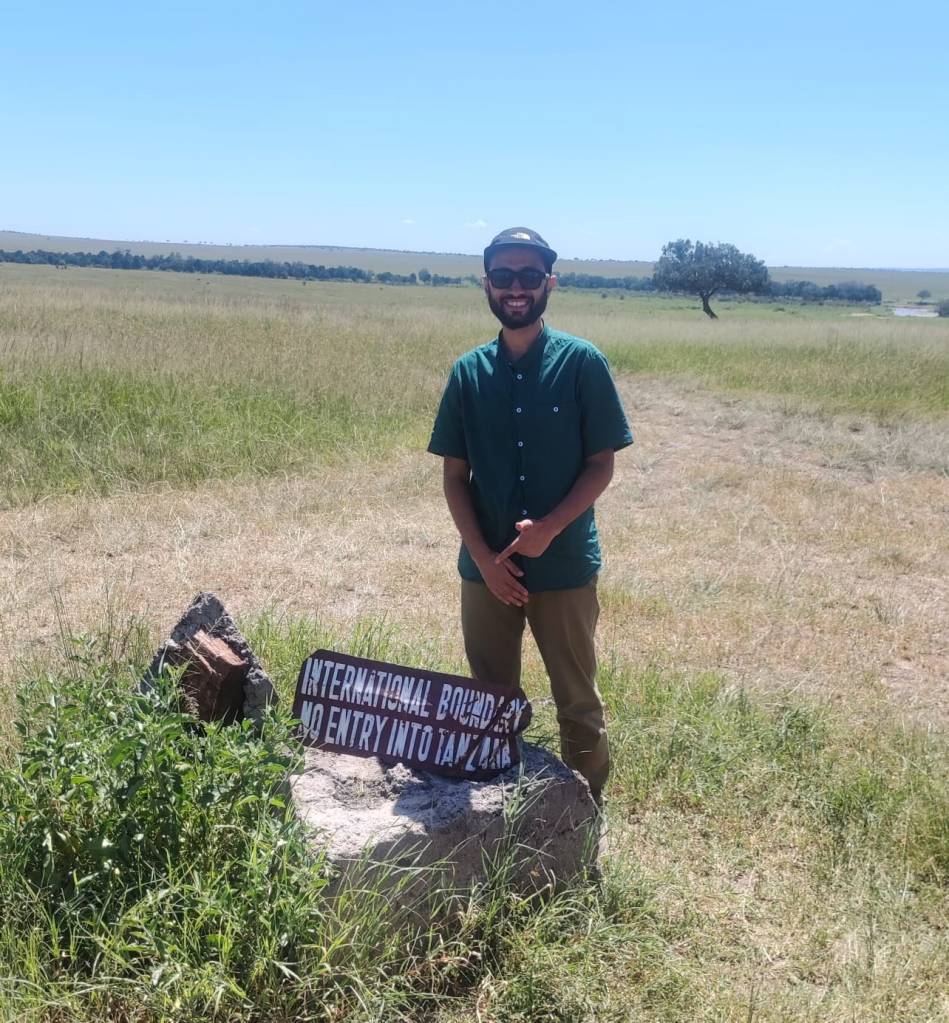
We even drove up to the Tanzania border, where the ecosystems of Masai Mara and Serengeti seamlessly connect across nations, completely indifferent to human boundaries.
By evening, we returned to camp exhausted, dusty, and deeply satisfied.
On the final morning, we visited a nearby Maasai community village.
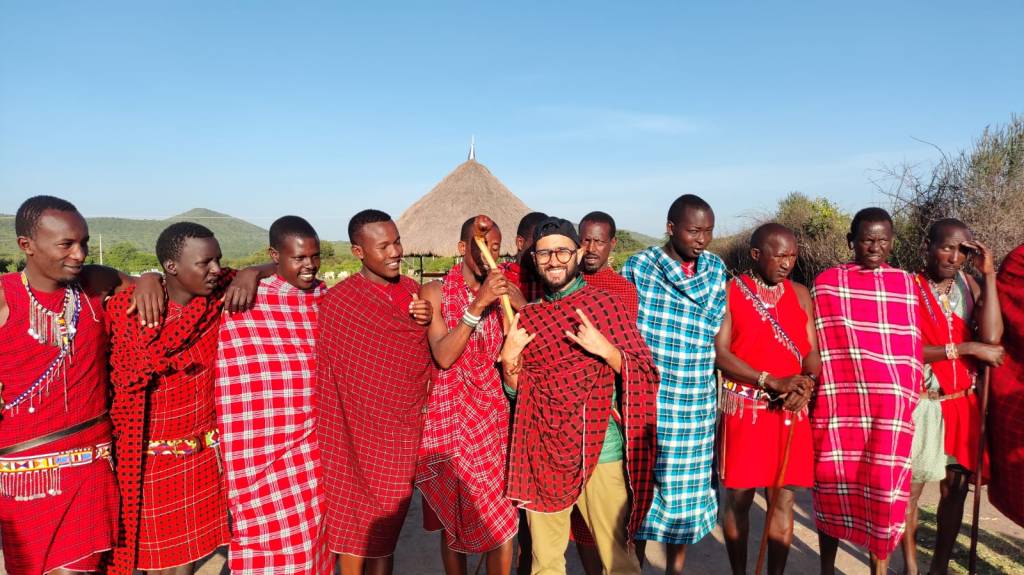
The Maasai people are among the most recognizable indigenous communities in East Africa, known for their traditions, clothing, livestock culture, and deep connection to the land. We watched them dance, and eventually joined them, only to realize how much easier their famous jumping dance looked from a distance.
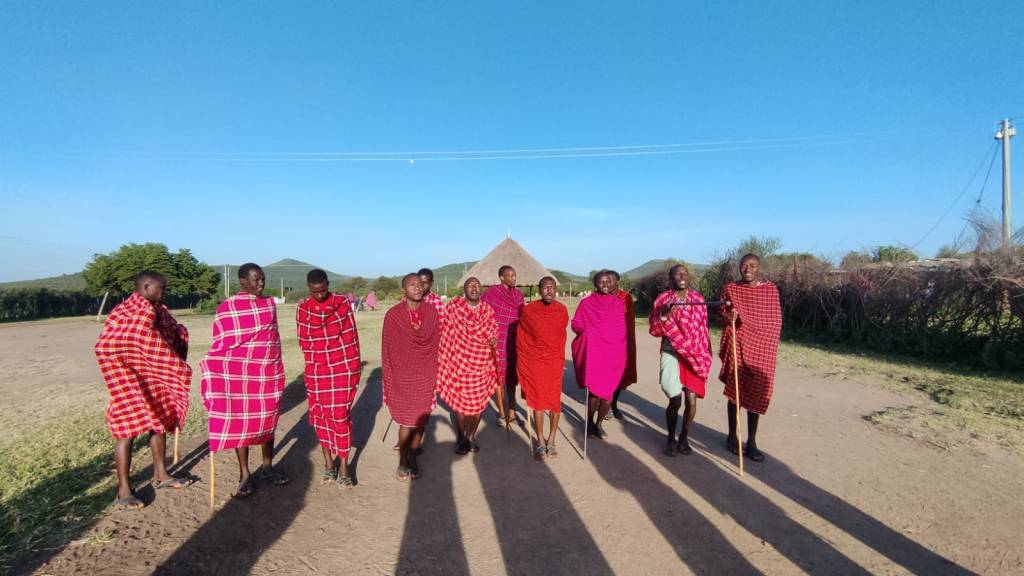
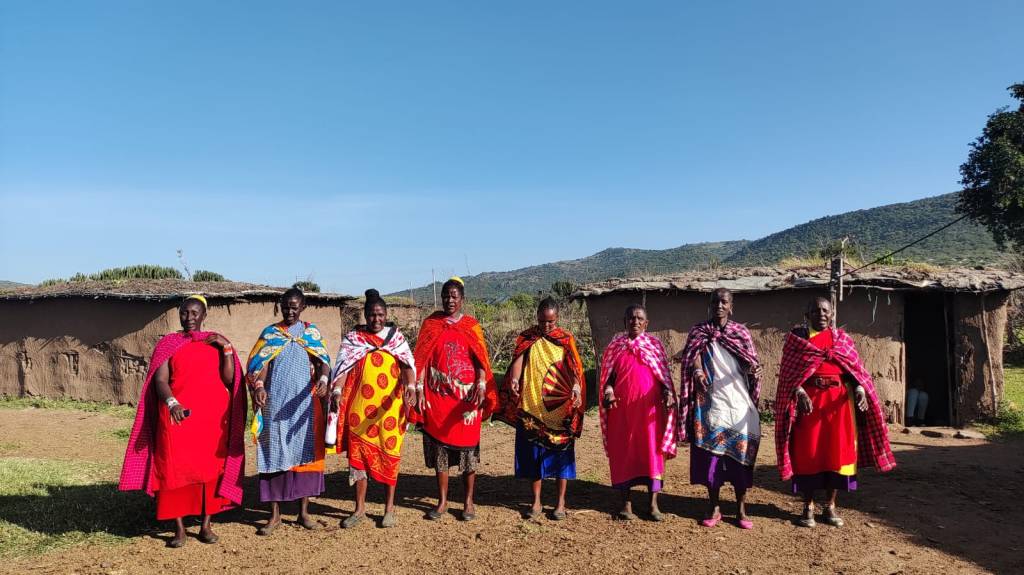
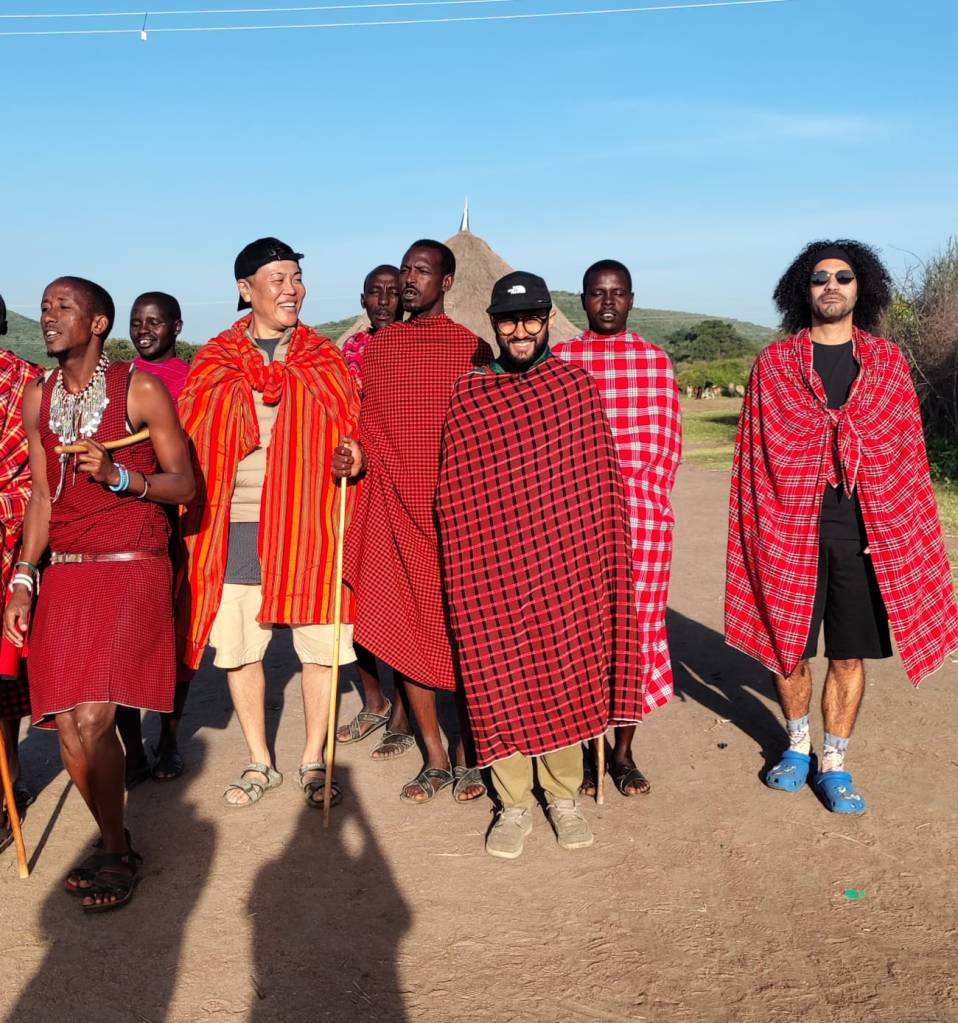
The village visit was especially fascinating because of the stories and knowledge shared there — about local herbs, survival, livestock, and community structures. They spoke about how leadership worked within the clan and how deeply their lives remained tied to nature.
One story particularly stayed with me: the older tradition where young boys would go into the wild as part of a rite of passage and return with the head of a lion as proof of their courage and readiness to protect the community.
Eventually, we drove back to Nairobi.
And as I said earlier, Kenya is far more than just Masai Mara. Nairobi itself surprised me. Cool weather, lively neighborhoods, and uniquely cosmopolitan feel. One moment you feel deeply in East Africa, and the next moment you pass through areas filled with Indian restaurants, Western cafés, and global cultures blending together.
But perhaps the most underrated part of Kenya, at least for me, was its coastline.
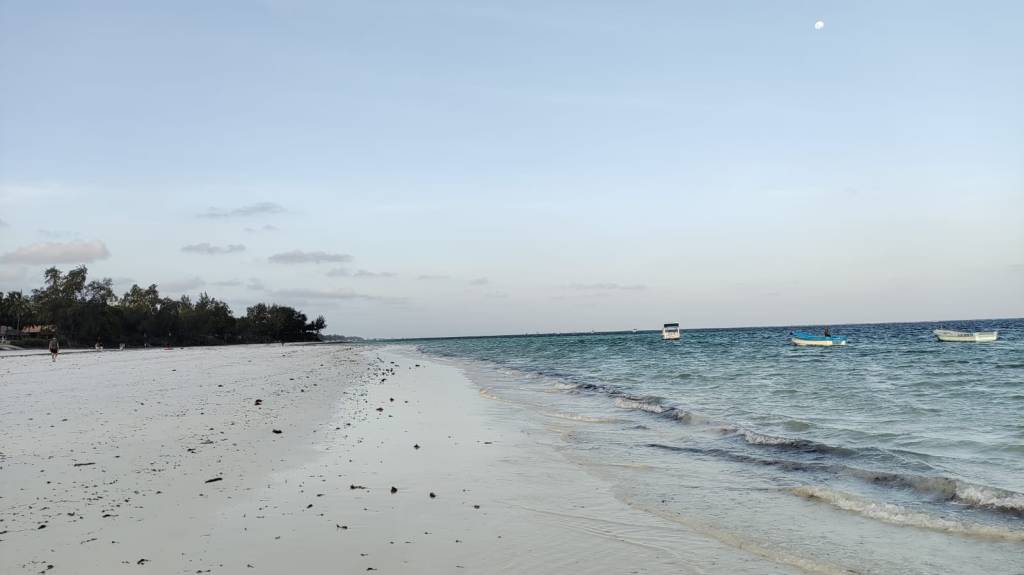
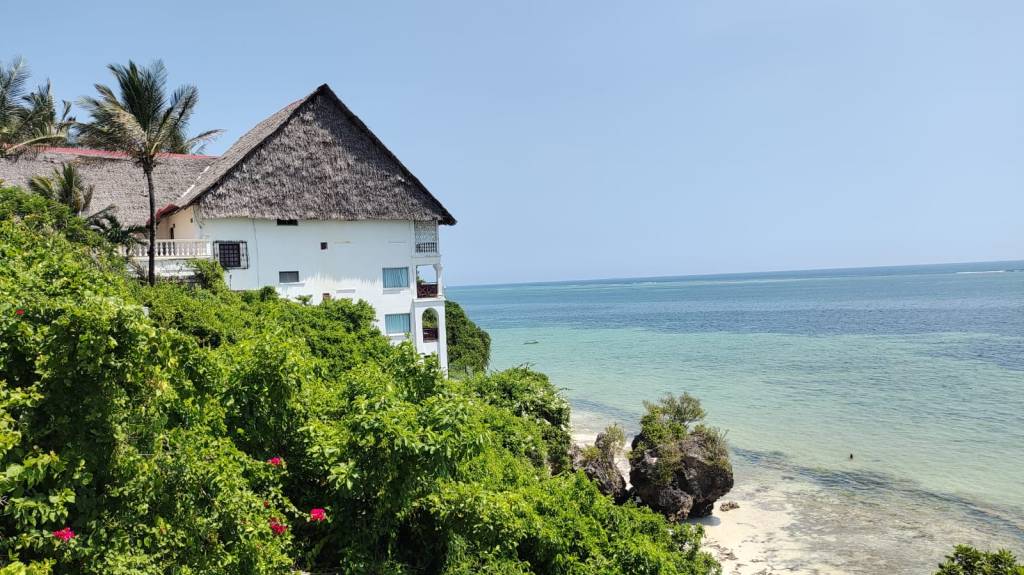
People often dream about white-sand beaches in faraway tropical destinations, without realizing how unbelievably beautiful the Kenyan coast already is. I later spent a week around Mombasa and Diani Beach, and the beaches there were stunning.
There is still so much I did not see. Like Mount Kenya. Or Mount Kilimanjaro from afar. Maybe I will write about my overall Kenya experience someday.
But for today, I simply wanted to revisit my memories of Masai Mara once again — to relive what it felt like to see lions in the wild for the very first time.






Leave a Reply